

You can energize your body and mind before work with these five essential morning yoga poses that take just 10 minutes. Start with Cat-Cow stretches to warm up your spine, then flow into Downward-Facing Dog to lengthen your entire body. Follow with Standing Forward Bend to release tension, and move into Warrior One to build strength and stability. Finish in Child's Pose for a calming restoration that centers your mind. Practice these poses on an empty stomach while maintaining steady breathing, and modify positions as needed for your flexibility level. Understanding proper alignment and technique will help you maximize these poses' benefits.
Highlights
- Cat-Cow Stretch alternates between arching and rounding the spine for 1-2 minutes to warm up and improve flexibility.
- Downward-Facing Dog stretches the entire body while strengthening arms and shoulders for 2 minutes.
- Standing Forward Bend releases spine tension and increases blood flow to the brain for 2 minutes.
- Warrior One pose builds strength and stability while opening hips and chest for 2 minutes per side.
- Child's Pose provides gentle relaxation and stress relief for 1-2 minutes before starting your workday.
Benefits of Morning Yoga

Starting your day with yoga can transform your physical and mental well-being. When you practice morning yoga, you'll boost your metabolism and increase blood flow throughout your body, setting yourself up for sustained energy throughout the day.
Here's what a morning yoga routine will do for you:
- You'll experience reduced muscle tension and joint stiffness, making your workday movements more comfortable and fluid.
- Your mind will become clearer and more focused, helping you tackle challenging tasks with better concentration.
- You'll notice improved posture and flexibility, which can prevent common workplace aches and pains.
- Your stress levels will decrease as you learn to connect your breath with movement, creating a sense of calm that lasts.
- You're likely to make better dietary choices and maintain higher energy levels.
Using yoga blocks can help you maintain proper alignment and make your morning poses more accessible and effective.
Getting Ready for Practice
Before rolling out your yoga mat, create a peaceful environment that sets you up for success. Here's what you'll need to prepare:
- Choose a quiet space that's free from distractions and has enough room for your full range of movement
- Set your room temperature between 68-72°F for ideal comfort during practice
- Wear comfortable, stretchy clothes that won't restrict your movement or breathing
- Keep a water bottle nearby to stay hydrated before and after your practice
You'll also want to gather any props you might need for your morning sequence, such as blocks or a blanket for support. While you don't need anything fancy to start, having these basic items ready will help you shift smoothly into your practice without interruption. Using a high-quality yoga mat will provide the perfect foundation for your morning practice and prevent slipping during poses.
Cat-Cow Stretch
One of the most essential poses in any morning yoga sequence is the Cat-Cow Stretch, a gentle flow that warms up your spine and awakens your core muscles. Start on your hands and knees, with your wrists directly under your shoulders and knees beneath your hips, keeping your spine neutral.
For the Cow pose, inhale deeply while lifting your chest and tailbone toward the ceiling, allowing your belly to sink toward the floor as you gently arch your back. As you exhale, shift into Cat pose by rounding your spine toward the ceiling, drawing your navel toward your spine, and tucking your chin to your chest. You'll want to flow between these positions smoothly, coordinating each movement with your breath for 5-10 cycles to achieve the full benefits of spinal mobility and core engagement.
Downward-Facing Dog
From your hands and knees position in Cat-Cow, you'll move into Downward-Facing Dog, a foundational pose that lengthens and strengthens your entire body. Press your palms firmly into the mat, spread your fingers wide, and lift your knees off the ground as you push your hips toward the ceiling.
- Keep your arms straight and shoulders away from your ears
- Press your heels toward the ground (they don't need to touch)
- Create a straight line from your wrists through your shoulders and hips
- Engage your core while keeping your spine long and neutral
You'll feel a deep stretch through your hamstrings, calves, and shoulders while building upper body strength. Take five deep breaths here, allowing your body to settle into the pose with each exhale, and notice how your morning energy begins to flow.
Standing Forward Bend
The Standing Forward Bend releases tension in your spine as you shift from Downward-Facing Dog to a standing position. Stand with your feet hip-width apart, then bend forward from your hips while keeping your legs straight but not locked.
Let your head and arms hang loosely toward the floor, allowing gravity to create a gentle stretch through your entire posterior chain. You'll feel the stretch intensify along your hamstrings, calves, and lower back as you breathe deeply and relax into the pose. If you can't reach the floor, don't worry – you can bend your knees slightly or grab your elbows with opposite hands. Hold this position for 5-8 deep breaths, feeling the blood flow to your brain increase while tight muscles gradually release their tension.
Child's Pose
After releasing tension while standing, it's time to return to the mat for Child's Pose, a gentle resting position that calms both mind and body. Here's how to perform it correctly:
- Start by kneeling on your mat with your big toes touching and knees spread about hip-width apart, while sitting back on your heels.
- Lower your torso between your thighs and rest your forehead on the mat, extending your arms straight out in front of you with palms facing down.
- Focus on breathing deeply while you let your shoulders relax away from your ears, feeling the gentle stretch along your spine and between your shoulder blades.
- Hold this restorative pose for 5-8 deep breaths, allowing your body to sink deeper with each exhale.
Warrior One
Moving into Warrior One, you'll build strength and stability while opening your hips and chest. Begin in a standing position, then step your right foot back about 3-4 feet while keeping your left foot pointing forward.
- Bend your front knee to a 90-degree angle, ensuring it's directly above your ankle
- Keep your back leg straight and strong, with your back heel planted at a 45-degree angle
- Square your hips toward the front of your mat while drawing your shoulders back
- Raise your arms overhead, palms facing each other, while lifting through your chest
- Ground down through both feet as you lengthen your spine and engage your core
Hold this pose for 3-5 deep breaths, then repeat on the opposite side to maintain balance in your practice.
Tips for Success
Several key principles will help you get the most out of your morning yoga routine. Here's what you'll need to focus on for best results:
- Practice on an empty stomach, waiting at least two hours after your last meal for better flexibility and comfort during poses.
- Set up your yoga space the night before with your mat, props, and comfortable clothing ready to go.
- Don't push yourself too hard in the morning; your body needs time to warm up, so start gently and increase intensity gradually.
- Keep your breathing steady and deep throughout each pose, synchronizing your movements with your inhales and exhales.
- If you're feeling stiff or experiencing discomfort in any pose, modify it to match your current flexibility level rather than forcing the full expression.
Common Morning Yoga Mistakes
Beginners frequently make mistakes that can diminish the benefits of their morning yoga practice or even lead to injury. Here are the key mistakes you'll want to avoid:
- Rushing through poses without proper alignment, which can strain your muscles and reduce the effectiveness of your practice
- Starting advanced poses before you're warmed up, especially when your body is stiff from sleep
- Focusing too much on achieving the "perfect" pose instead of listening to your body's limitations
- Skipping proper breathing techniques, which are essential for connecting movement with breath
- Practicing on a full stomach, which can make you feel uncomfortable and restrict your movement
Just like using an ergonomic mouse position helps prevent wrist strain during work, maintaining proper form during yoga poses is crucial for avoiding injury.
Remember that it's better to perform simpler poses correctly than to force yourself into complex positions you're not ready for.
Building a Consistent Practice
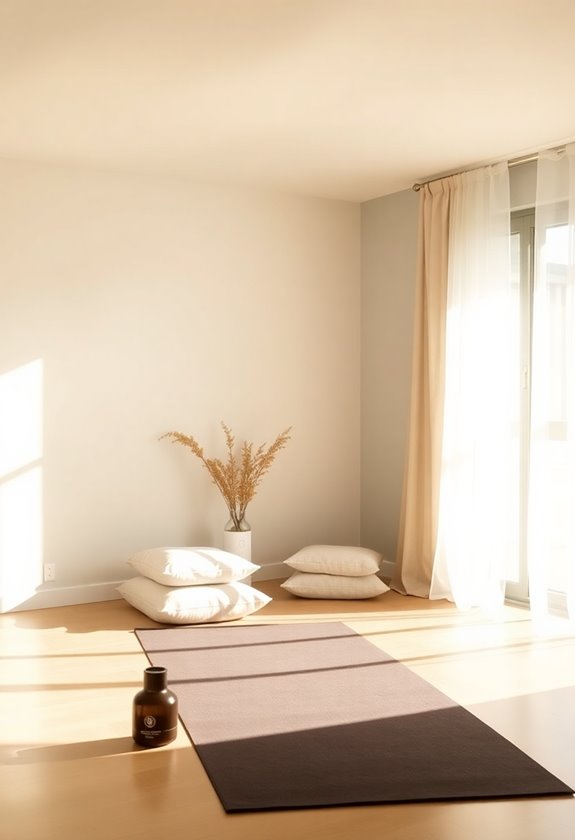
Once you've learned to avoid common mistakes, establishing a regular morning yoga routine is your next step toward success. You'll need to create a schedule that's realistic and sustainable for your lifestyle, keeping in mind that consistency matters more than duration.
Start by:
- Setting your alarm 15 minutes earlier than usual
- Preparing your yoga space the night before
- Keeping your mat and props visible as a reminder
- Tracking your practice in a simple journal or app
You're more likely to maintain your routine when you connect it to existing habits, like practicing right after brushing your teeth. Don't let perfection be the enemy of progress – even a five-minute session counts toward building your habit, and you can gradually increase your practice time as it becomes more natural. Consider using a yoga bolster to support and deepen your morning stretches while maintaining proper alignment.
Frequently Asked Questions
Can I Do Morning Yoga if I Have Chronic Back Pain?
You can practice morning yoga with chronic back pain, but you'll need to work closely with your healthcare provider and a qualified yoga instructor first. They'll help modify poses to suit your condition and prevent further injury. Start with gentle poses like cat-cow stretches and child's pose, avoiding any movements that cause discomfort. Remember to listen to your body, move slowly, and stop if you experience increased pain.
Should I Eat Breakfast Before or After Morning Yoga Practice?
For light morning yoga, you can practice on an empty stomach, as this helps prevent discomfort during poses and improves mindfulness. If you're planning an intense session or have blood sugar concerns, try eating a small, easily digestible snack like a banana 30 minutes before practice. After your yoga session, wait about 15-20 minutes before enjoying a nutritious breakfast to allow your body to fully settle.
What Type of Yoga Mat Is Best for Morning Practice?
As you commence your yoga journey, your mat is like your morning sanctuary. For daily practice, you'll want a mat that's at least 4-6mm thick with good grip and durability. Look for non-toxic PVC or eco-friendly materials like natural rubber or cork, which provide excellent stability and cushioning. If you're practicing on hard floors, consider a slightly thicker mat to protect your joints during those early morning sessions.
Is It Normal to Feel Dizzy During Morning Yoga Poses?
Feeling dizzy during morning yoga isn't uncommon, especially if you're practicing on an empty stomach or moving too quickly between poses. You'll want to guarantee you're breathing properly throughout your practice, as shallow breathing can contribute to dizziness. If you experience frequent dizziness, try eating a light snack 30 minutes before practice, moving more slowly through changes, and staying well-hydrated before and during your session.
Can Morning Yoga Help With Menstrual Cramps?
Like a gentle wave washing away discomfort, morning yoga can indeed help ease menstrual cramps. When you practice specific poses like Child's Pose and Cat-Cow stretches, you'll increase blood flow to your pelvic area. These movements release tension in your lower back and abdomen, while deep breathing during yoga helps reduce stress hormones that can worsen cramping. You'll want to avoid inverted poses during menstruation, focusing instead on gentle, flowing movements.


