To protect your eyes during screen time, follow the 20-20-20 rule: every 20 minutes, look at something 20 feet away for 20 seconds. You'll notice reduced eye strain when you combine this practice with proper workspace setup, including positioning your monitor at arm's length and slightly below eye level. Enhance the rule's effectiveness by performing simple eye exercises, like rolling your eyes clockwise and counterclockwise, while taking your scheduled breaks. Using blue light glasses and anti-glare screens can provide additional protection, but mastering the basic 20-20-20 technique will establish the foundation for thorough eye care strategies.
Highlights
- Every 20 minutes, pause your screen work to look at an object 20 feet away for 20 seconds.
- Combine the 20-20-20 rule with gentle eye rolls in both directions to release muscle tension.
- Set automatic reminders on your device to maintain consistent practice of the 20-20-20 rule throughout workday.
- Position your monitor arm's length away and slightly below eye level while practicing the 20-20-20 rule.
- Perform deliberate blinking exercises during your 20-second breaks to maintain proper eye moisture.
Understanding the 20-20-20 Rule
The 20-20-20 rule offers a simple yet effective way to reduce digital eye strain and prevent computer vision syndrome. Here's how it works: Every 20 minutes, you'll need to look at something that's at least 20 feet away from your screen for at least 20 seconds.
When you're focusing on a nearby object like your screen, your eye muscles are constantly contracted, which can lead to fatigue and discomfort. By following this rule, you're giving your eyes regular breaks to relax and reset. While looking at distant objects, your eyes naturally adjust their focus, which helps reduce muscle tension and prevents eye strain. You'll find that implementing this practice throughout your workday can greatly improve your visual comfort and maintain better eye health long-term.
Signs of Digital Eye Strain
During extended screen time, your body sends clear warning signals when your eyes are under stress. You'll notice a combination of physical discomfort and visual changes that shouldn't be ignored.
Common signs of digital eye strain include:
- Blurred or double vision that comes and goes throughout your workday
- Persistent dryness, redness, or a burning sensation in your eyes
- Headaches that typically develop around your temples or forehead
- Neck and shoulder tension that worsens as you continue working
- Increased sensitivity to light, especially from your digital screens
- Difficulty focusing when switching between near and far objects
If you're experiencing several of these symptoms regularly, especially during or after computer use, it's time to implement proper eye care strategies.
Setting Up Your Workspace
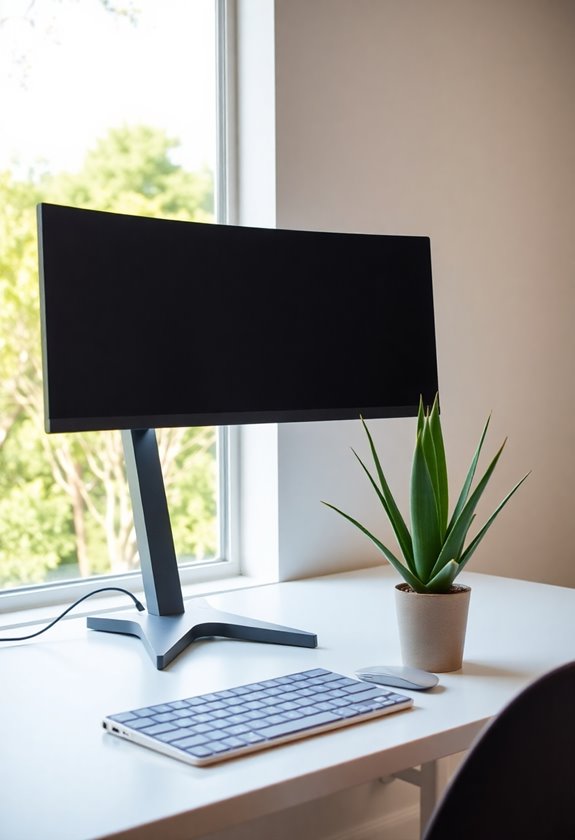
Creating an ideal workspace setup is your first line of defense against digital eye strain. You'll need to focus on proper positioning and lighting to protect your eyes during long hours of screen time.
Follow these essential guidelines to optimize your workspace:
- Position your monitor at arm's length (20-24 inches) and slightly below eye level, guaranteeing you're looking down at a 15-20 degree angle.
- Adjust your screen brightness to match your surrounding environment, using the paper test to check if your screen matches the brightness of a white sheet.
- Install an anti-glare screen filter and position your desk perpendicular to windows to minimize reflections and harsh light.
- Confirm your room has adequate ambient lighting, combining natural light with desk lamps that don't create screen glare.
Using screen protection filters can significantly reduce eye fatigue by minimizing glare and reflections from your display.
Eye Exercises During Screen Time
Regular eye exercises throughout your screen time can greatly reduce eye strain and maintain your visual comfort. While you're working, you'll want to incorporate these proven exercises into your routine every hour:
- Roll your eyes clockwise and counterclockwise in slow, deliberate circles for 10 seconds each direction
- Focus on your thumb at arm's length, then slowly bring it closer to your nose while maintaining focus
- Look at distant objects through your window, shifting between three points that are at least 20 feet away
- Blink deliberately and slowly 10 times to help redistribute moisture across your eyes' surface
These exercises work best when you're consistent with them, so set hourly reminders on your device to guarantee you don't forget to give your eyes these important movement breaks.
Natural Light and Eye Health
Natural light plays an essential role in maintaining healthy eyes and supporting your circadian rhythm. When you're working indoors, you'll want to position yourself near windows and take advantage of natural daylight whenever possible, as it helps reduce eye strain and promotes better visual acuity.
- Spend at least 30 minutes outdoors during daylight hours to expose your eyes to natural UV light, which helps regulate your body's sleep-wake cycle
- Position your workspace to receive indirect natural light, avoiding glare and harsh shadows that can strain your eyes
- Take regular breaks by looking out windows at distant objects, allowing your eyes to adjust to varying depths and natural lighting conditions
- Consider using light therapy lamps during darker months when natural sunlight is limited, especially if you're working in windowless environments
Protective Tools for Screen Users
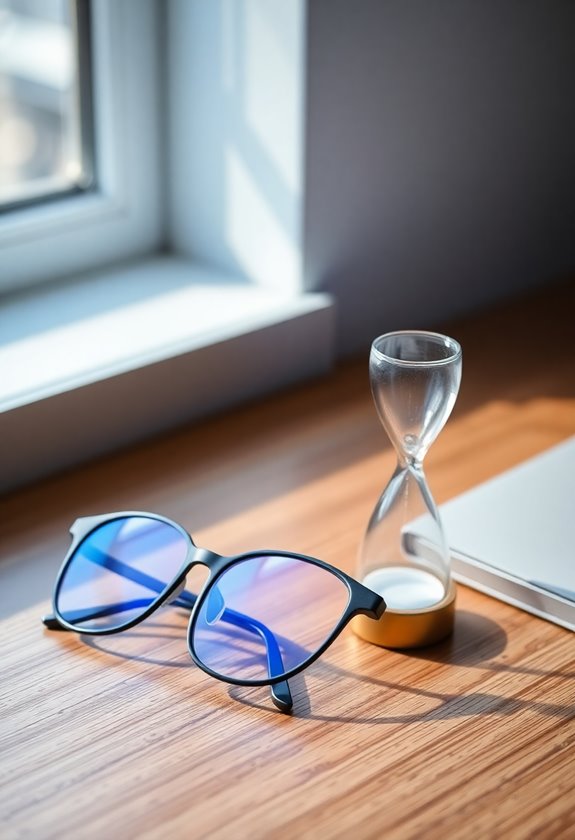
Digital eye strain is a growing concern for screen users, but several protective tools can help minimize its impact on your vision. Here's what you'll need to protect your eyes effectively:
- Blue light filtering glasses, which block harmful wavelengths while allowing beneficial light to pass through, can reduce eye fatigue during long screen sessions.
- Anti-glare screen protectors that you can easily attach to your devices will help decrease reflection and minimize the strain on your eyes when working in bright environments.
- Screen brightness adjustment tools, including built-in features and third-party apps, will automatically optimize your display's illumination based on ambient lighting conditions.
- An ergonomic monitor stand that positions your screen at eye level, about 20-24 inches from your face, helps maintain proper viewing angles and reduces neck strain.
Blue light glasses offer proven benefits in reducing digital eye strain and improving sleep quality by filtering out harmful blue light emissions from digital screens.
Healthy Screen Time Habits
Establishing healthy screen time habits is essential for maintaining long-term eye health and preventing digital eye strain. You'll find that integrating proper practices into your daily routine can greatly reduce eye fatigue and discomfort while working with digital devices.
- Position your screen at arm's length and slightly below eye level, ensuring your neck remains in a natural, comfortable position while you work.
- Adjust your screen's brightness to match your surrounding environment, which should help reduce the strain on your eyes during extended viewing periods.
- Take regular breaks from your screen every hour, even if it's just for a few minutes to walk around or look at distant objects.
- Keep your screen clean and free from dust, as smudges and particles can cause your eyes to work harder than necessary.
Beyond the 20-20-20 Rule

While the 20-20-20 rule (looking at something 20 feet away for 20 seconds every 20 minutes) is a valuable starting point for eye care, you'll need additional strategies to fully protect your vision during screen time.
- Perform gentle eye rolls every hour by slowly moving your eyes in clockwise and counterclockwise circles for 30 seconds each direction.
- Practice palming by covering your closed eyes with your warm palms for two minutes, allowing your eye muscles to completely relax in darkness.
- Focus on deliberate blinking exercises, where you slowly close your eyes for two seconds before opening them, repeating this ten times every hour.
- Adjust your screen's brightness to match your surrounding environment, and you'll find it's easier on your eyes to maintain proper focus throughout the day.
Frequently Asked Questions
Can Children Follow the 20-20-20 Rule While Doing Homework?
Yes, you can teach your children to follow the 20-20-20 rule during homework sessions by encouraging regular breaks. Every 20 minutes, have them look at something 20 feet away for 20 seconds while staying seated. You'll help protect their eyes by setting a timer and making this a routine part of study time, incorporating these quick breaks between homework tasks.
Does Wearing Prescription Glasses Eliminate the Need for the 20-20-20 Rule?
No, wearing prescription glasses doesn't eliminate your need for the 20-20-20 rule. While your glasses correct vision problems like nearsightedness or farsightedness, they can't prevent digital eye strain from prolonged screen time. You'll still need to give your eyes regular breaks because focusing on close-up screens for extended periods causes eye muscle fatigue, regardless of whether you're wearing corrective lenses or not.
How Does the 20-20-20 Rule Work During Nighttime Computer Use?
You might think the darkness of night makes your eyes more comfortable at the computer, but they still need regular breaks. The 20-20-20 rule works the same at night – look at something 20 feet away for 20 seconds every 20 minutes. In fact, it's even more essential at night since your eyes are working harder against screen glare and reduced ambient lighting, which can increase eye strain and fatigue.
Will Following the 20-20-20 Rule Help Prevent Existing Eye Problems From Worsening?
Following the 20-20-20 rule can help manage existing eye conditions by reducing eye strain and preventing further deterioration. While it won't cure underlying vision problems, you'll find this practice particularly beneficial if you're dealing with conditions like computer vision syndrome or dry eyes. When you consistently give your eyes regular breaks, you're helping maintain their current health status and potentially slowing down the progression of existing issues.
Can Contact Lens Wearers Practice the 20-20-20 Rule Differently?
If you're wearing contact lenses, you can follow the 20-20-20 rule just like anyone else, but you'll want to keep your eyes extra lubricated. During your 20-second breaks, you might need to use prescribed eye drops to prevent dryness. You can also gently close your eyes for a few seconds during these breaks, which helps distribute moisture across your contacts and reduces irritation while you're looking at distant objects.