You can combat brain fog by incorporating specific brain-boosting foods into your daily diet. Start with omega-3 rich fatty fish like salmon and mackerel, which enhance cognitive function and reduce inflammation. Add antioxidant-packed berries, dark leafy greens, and nuts to protect brain cells from oxidative stress. Including fermented foods like kimchi and kefir supports your gut-brain axis, while Mediterranean diet staples like extra virgin olive oil improve memory and mental clarity. For ideal results, combine these foods with proper hydration and consistent meal timing. Discover how these powerful nutritional strategies can transform your mental performance.
Highlights
– Fatty fish rich in omega-3s
Understanding Brain Fog
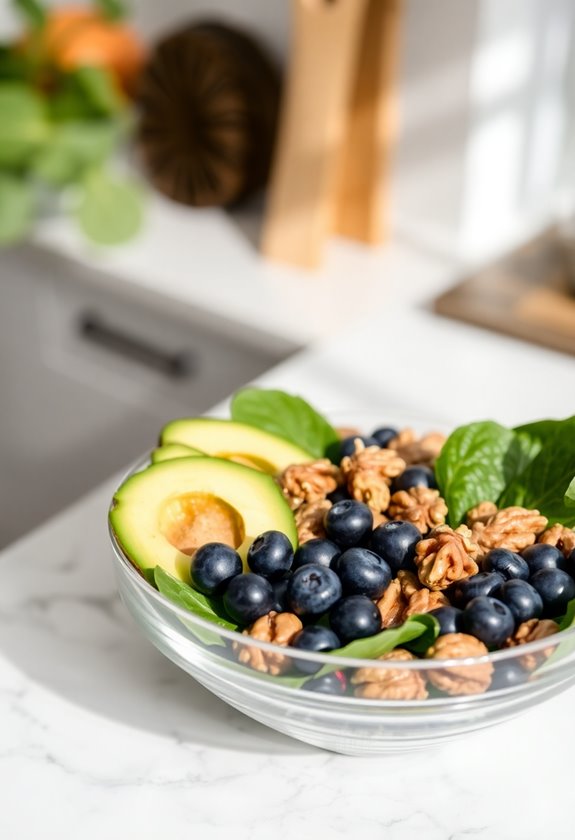
Brain fog, a common cognitive symptom, occurs when you can't think clearly or focus properly. You'll often experience difficulty concentrating, mental fatigue, and slower processing speeds that can affect your daily activities and work performance.
The condition can stem from various underlying factors:
- Lack of quality sleep or irregular sleep patterns
- Chronic stress and prolonged anxiety
- Poor dietary choices and nutritional deficiencies
- Hormonal imbalances or thyroid issues
- Certain medications or medical conditions
While brain fog isn't typically a medical diagnosis on its own, it's your body's way of signaling that something needs attention. You might notice that you're forgetting simple things, having trouble making decisions, or feeling mentally exhausted even after adequate rest, which can greatly impact your productivity and overall well-being.
Mediterranean Diet Benefits

Diving into the Mediterranean diet reveals powerful brain-boosting benefits backed by extensive research. You'll find that this eating pattern emphasizes whole foods rich in omega-3 fatty acids, antioxidants, and essential nutrients that support cognitive function. Research shows that following a Mediterranean-style diet can greatly improve mental clarity and reduce inflammation that contributes to brain fog.
- Extra virgin olive oil contains polyphenols that protect brain cells and enhance memory function
- Fatty fish like salmon and sardines provide DHA, which supports ideal brain structure and neural communication
- Leafy greens and colorful vegetables deliver antioxidants that fight oxidative stress in brain tissue
- Nuts and seeds offer vitamin E and healthy fats that maintain cognitive flexibility and mental sharpness
Power of Omega-3 Rich Foods
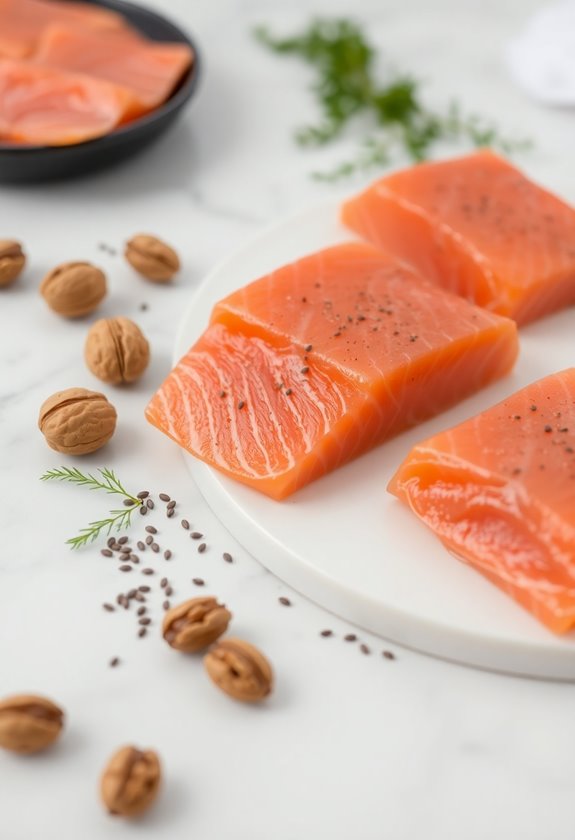
From within the spectrum of brain-boosting nutrients, omega-3 fatty acids stand out as exceptional cognitive enhancers. You'll find these powerful compounds primarily in fatty fish, which can effectively clear mental cloudiness and enhance your brain's processing speed.
Here's where you'll find the richest sources of omega-3s:
- Wild-caught salmon, which delivers up to 2.2 grams per 3.5-ounce serving
- Mackerel, offering concentrated doses of both EPA and DHA
- Sardines, providing an economical yet potent omega-3 source
- Flaxseeds and walnuts for plant-based alternatives
To maximize your omega-3 intake, you'll want to consume these foods 2-3 times per week, ensuring adequate levels for ideal brain function. Research shows that consistent omega-3 consumption can improve memory function, reduce inflammation, and enhance overall cognitive performance.
Antioxidant Superfoods

When it comes to fighting brain fog, antioxidant-rich foods serve as your mental shield against oxidative stress and cognitive decline. You'll find these powerful compounds in vibrant, colorful fruits and vegetables that help protect your brain cells from harmful free radicals. Research shows that incorporating antioxidant-rich foods into your daily diet can enhance mental clarity and improve your cognitive function over time.
- Dark berries like blueberries, blackberries, and acai berries contain flavonoids that cross the blood-brain barrier to boost memory
- Dark leafy greens such as spinach and kale provide essential nutrients that support neurotransmitter production
- Pecans, walnuts, and other tree nuts deliver vitamin E and polyphenols that protect brain tissue
- Dark chocolate with 70% or higher cacao content offers flavanols that improve blood flow to your brain
Gut-Brain Connection Foods

While antioxidants protect your brain from damage, a healthy gut microbiome directly influences your mental clarity through the gut-brain axis. You'll want to focus on these proven gut-supporting foods to enhance your cognitive function:
- Fermented foods like kimchi, sauerkraut, and kefir, which contain beneficial probiotics that support neurotransmitter production
- Prebiotic-rich foods including Jerusalem artichokes, garlic, and onions that feed your beneficial gut bacteria
- High-fiber vegetables such as broccoli, brussels sprouts, and leafy greens that promote diverse gut flora
- Omega-3 rich fish like salmon and sardines, which support both gut health and brain function
For best results, you'll need to consume these foods regularly and combine them with adequate hydration to maintain ideal gut-brain communication.
Hydration and Mental Clarity

Through countless scientific studies, proper hydration has emerged as a cornerstone of mental clarity and cognitive performance. When you're dehydrated by just 2%, you'll experience decreased attention span, memory function, and problem-solving abilities that can greatly impact your daily mental performance. Your brain's electrical signals rely heavily on proper fluid balance to maintain ideal cognitive processing and neurotransmitter function.
- Drink at least 8-10 glasses of water daily, spacing them throughout your day rather than consuming large amounts at once
- Include hydrating foods like cucumber, watermelon, and celery, which contribute to your daily fluid intake while providing essential nutrients
- Monitor your urine color – it should be light yellow to clear, indicating proper hydration levels
- Set reminders on your phone or use a marked water bottle to track your daily water consumption systematically
Meal Timing Strategies

Strategic meal timing can make or break your mental clarity throughout the day. You'll want to establish a consistent eating schedule that aligns with your body's natural circadian rhythm while maintaining stable blood sugar levels throughout your working hours.
To optimize your cognitive function, follow these proven timing strategies:
- Eat breakfast within an hour of waking to jumpstart your metabolism and provide essential fuel for your brain
- Space your meals 3-4 hours apart to maintain steady energy levels and prevent cognitive dips
- Consume your largest meal at least 3 hours before bedtime to support quality sleep
- Consider a 12-hour overnight fasting window to enhance mental clarity and cellular repair
- Time protein-rich meals before mentally demanding tasks to improve focus and concentration
Frequently Asked Questions
Can Certain Food Combinations Increase Brain Fog Symptoms?
Powerful pairings of problematic foods can indeed intensify your brain fog. When you combine refined carbs with high-sugar items, you'll experience sharper cognitive decline and mental haziness. High-fat foods eaten with processed sugars can similarly slow your thinking and reduce mental clarity, while mixing caffeine-heavy beverages with sugary snacks may trigger energy crashes that worsen foggy thinking.
How Long Does It Take for Dietary Changes to Improve Brain Fog?
You'll typically notice initial improvements in brain fog within 2-4 days of making positive dietary changes, though significant results often take 2-3 weeks. Your brain needs time to respond to enhanced nutrition and establish new metabolic patterns, while consistent healthy eating can lead to lasting cognitive benefits within 4-6 weeks. The speed of improvement varies based on your current diet, overall health, and the specific changes you're implementing.
Are There Specific Foods That Worsen Brain Fog at Night?
Several foods can greatly worsen your brain fog at night, particularly when consumed close to bedtime. Heavy, high-fat meals like fried foods and processed meats can slow down digestion and disrupt sleep quality. You'll also want to avoid sugary treats, refined carbohydrates, and foods high in tyramine (aged cheeses, cured meats) which can stimulate brain activity. Surprisingly, even seemingly healthy options like dark chocolate and tomatoes can trigger nighttime mental cloudiness due to their caffeine and acidic content.
Do Caffeine Alternatives Work as Effectively for Clearing Brain Fog?
While caffeine alternatives can help with mental clarity, they typically don't match caffeine's effectiveness. Natural options like ginseng, B vitamins, and rhodiola may provide steady energy without the crash you'd get from coffee. You'll find that L-theanine, commonly found in green tea, offers focused alertness without jitters, while adaptogens like ashwagandha can improve cognitive function through different biochemical pathways than caffeine.
Should Brain Fog-Fighting Foods Be Eaten Differently Based on Age?
Ever wonder why your grandmother swears by fish while your teenage cousin reaches for berries? Your nutritional needs for fighting brain fog do shift with age. In your teens and 20s, you'll benefit most from omega-3 rich foods and antioxidants, while after 40, you should focus more on foods high in B12 and anti-inflammatory compounds. Your body's ability to absorb and process nutrients changes notably throughout life, so you'll need to adapt your brain-boosting diet accordingly.