
You'll beat brain fog and sharpen your focus with these proven mental clarity exercises that combine tactical breathing, mindful movement, and cognitive training techniques. Start with box breathing: inhale for 4 counts, hold for 4, exhale for 4, and hold again for 4, repeating five times. Practice mindful walking meditation by focusing on each step's heel-to-toe motion, or try brain-boosting neck rolls and shoulder stretches to improve circulation. Engage in sensory grounding by identifying 5 things you see, 4 textures you feel, 3 sounds you hear, 2 scents you smell, and 1 taste. These techniques are just the beginning of your journey toward mental clarity.
Highlights
- Practice box breathing with 4-second counts to increase oxygen flow to the brain and restore mental clarity.
- Use the five-senses grounding technique to identify objects, textures, sounds, scents, and tastes in your environment.
- Perform targeted stretches like neck rolls and shoulder stretches to improve blood circulation and enhance cognitive function.
- Take strategic 10-20 minute power naps between 1-3 PM to combat brain fog and boost mental alertness.
- Play memory match card games or create mental maps to improve cognitive abilities and sharpen focus.

Navy SEALs use a tactical breathing technique called box breathing to stay calm and clear-headed during high-stress situations. You'll find this method especially helpful when brain fog starts creeping in during your busy day.
Here's how to practice box breathing:
- Inhale slowly through your nose while counting to four
- Hold your breath for a count of four while keeping your chest expanded
- Exhale completely through your mouth for another count of four
- Hold your lungs empty for a final count of four
You should repeat this breathing pattern for at least five cycles whenever you're feeling mentally clouded or overwhelmed. The structured rhythm helps reset your autonomic nervous system while increasing oxygen flow to your brain, which naturally enhances mental clarity and focus.
Mindful Walking Meditation

A simple walk can transform into a powerful brain-clearing exercise when you add mindfulness to your movement. Instead of rushing through your walk lost in thought, focus intently on each step, the rhythm of your breathing, and the sensation of your feet meeting the ground.
Here's how to practice mindful walking meditation effectively:
- Start by walking at a slower pace than usual, keeping your gaze soft and focused about 6 feet ahead
- Notice how your weight shifts from heel to toe with each step you take
- Pay attention to the subtle movements of your arms and legs as they work in harmony
- When your mind wanders to other thoughts, gently guide it back to the physical sensations of walking
- Maintain this practice for at least 10 minutes to experience its fog-clearing benefits
Brain-Boosting Stretches

Simple stretching routines can supercharge your brain function and melt away mental fog. When you engage in targeted stretches that improve blood flow to your brain, you'll experience enhanced mental clarity and improved cognitive performance throughout your day.
- Stand tall and perform slow neck rolls in both directions, holding each position for 10 seconds to release tension that blocks mental processing
- Stretch your shoulders back while lifting your chest, which increases oxygen flow to your brain and helps restore mental alertness
- Try the forward fold position, letting your head hang heavy while breathing deeply to encourage fresh blood flow to your brain
- Practice the cross-body shoulder stretch, reaching one arm across your chest while supporting it with the other, alternating sides every 30 seconds
Power Napping Reset

While stretching can energize your mind, strategic power napping offers another powerful way to clear brain fog. You'll find that a carefully timed 10-20 minute nap between 1:00 PM and 3:00 PM can reset your mental clarity and boost cognitive performance for hours afterward.
To maximize your power nap's effectiveness, follow these essential guidelines:
- Set an alarm to avoid oversleeping, which can leave you feeling groggy
- Find a quiet, slightly dark space where you won't be interrupted
- Use a light blanket, as your body temperature drops during sleep
- Position yourself in a semi-reclined position to avoid falling into deep sleep
Don't worry if you don't actually fall asleep during your rest period, as simply closing your eyes and relaxing can provide significant mental benefits. Consider taking natural sleep supplements before your power nap to enhance its restorative effects.
Cold Water Face Plunge

Shocking your system with cold water can rapidly clear mental cloudiness and boost alertness levels. When you're experiencing brain fog, try submerging your face in a bowl of cold water for 15-30 seconds, which triggers your body's mammalian dive reflex and increases blood flow to your brain. This practice, known as the cold water face plunge, can help reset your mental state and improve cognitive function within minutes.
- Fill a large bowl with cold water and add 2-3 ice cubes for ideal temperature
- Take several deep breaths before submerging your face for 15-30 seconds
- Keep your eyes closed and focus on maintaining steady, calm breathing through the plunge
- Pat your face dry afterward and notice the immediate clarity and alertness boost
During challenging work sessions, you can repeat this exercise every few hours to maintain mental sharpness and combat persistent brain fog.
Memory Match Cards

Playing memory match card games sharpens your cognitive abilities and helps combat brain fog through active recall and pattern recognition. You'll need a standard deck of playing cards or a specialized memory card set to begin strengthening your mental clarity and concentration.
Online brain training offers convenient access to digital memory matching games for on-the-go practice.
Here's how to practice memory matching effectively:
- Shuffle and arrange cards face-down in a grid pattern
- Turn over two cards at a time, trying to find matching pairs
- When you find a match, remove those cards from play
- If they don't match, turn them face-down again and remember their positions
- Start with a smaller grid (4×4) and gradually increase difficulty by adding more cards
For an extra challenge, you can set time limits or try matching three cards instead of pairs, which forces your brain to maintain focus while processing multiple pieces of information.
Quick Physical Bursts

Quick bursts of physical activity can instantly boost your brain's oxygen supply and fight mental fatigue. When you're feeling mentally sluggish, taking just 60 seconds to engage in rapid movement can help clear your mind and improve cognitive function throughout the day.
- Jump in place for 30 seconds while pumping your arms above your head
- Run up and down a flight of stairs twice, focusing on maintaining proper posture
- Perform 20 jumping jacks followed by 10 quick push-ups against your desk
- Do high-knee marches in place for 45 seconds while rotating your shoulders
You'll notice improved mental clarity within minutes of completing these exercises, as the increased blood flow helps eliminate the foggy feeling that's slowing down your thought process. Remember to breathe deeply during these movements to maximize oxygen delivery to your brain.
Cross-Body Movement Patterns

Cross-body movements engage both hemispheres of your brain simultaneously, helping to break through mental fog and enhance cognitive processing. You'll want to incorporate these patterns into your daily routine through simple, repeatable exercises that encourage bilateral coordination.
Try these cross-body movements for best results:
- Touch your right hand to your left knee while marching in place, then alternate sides for 30 seconds
- Draw large figure-eights in the air with your arms crossing over your body's midline
- Reach your right arm across to your left side while twisting your torso, then switch sides with controlled movements
- Cross-crawl by touching opposite elbows to knees while walking forward
Perform these exercises for 2-3 minutes whenever you're feeling mentally sluggish, and you'll notice improved clarity and focus.
Mental Map Drawing
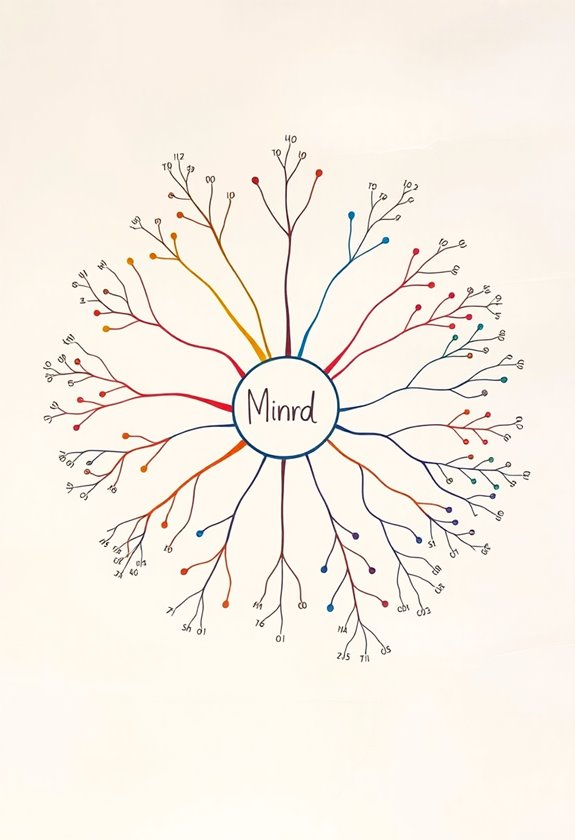
Simple mental map drawing exercises can strengthen your brain's spatial awareness and memory pathways while clearing cognitive cobwebs. When you're feeling mentally clouded, take out a blank piece of paper and challenge yourself to draw a detailed map from memory of a familiar location.
- Draw your daily commute route, including landmarks and street names you pass
- Sketch the floor plan of your childhood home, labeling each room and significant features
- Map out your neighborhood from a bird's-eye view, marking points of interest
- Create a diagram of your local grocery store's layout, noting different departments
This exercise forces your brain to access stored spatial information while engaging multiple cognitive processes, including memory recall, visualization, and organizational thinking. You'll find that regular practice of mental mapping helps sharpen your focus and improve your ability to process complex information.
Sensory Grounding Practice

When brain fog clouds your mind, sensory grounding exercises can help you reconnect with the present moment and regain mental clarity. This technique engages your five senses to anchor your awareness in the present, reducing mental overwhelm and improving focus.
Try these structured sensory observations:
- Name 5 things you can see in your immediate environment
- Identify 4 different textures you can touch around you
- Listen for 3 distinct sounds in your surroundings
- Notice 2 unique scents in the air
- Focus on 1 taste, even if it's just the inside of your mouth
Practice this exercise whenever you're feeling mentally scattered, and you'll find it easier to shift from a foggy state to heightened awareness and improved concentration.
Frequently Asked Questions
Can Brain Fog Be a Symptom of an Underlying Medical Condition?
Brain fog can indeed be a symptom of various medical conditions that you'll want to discuss with your healthcare provider. It's commonly associated with autoimmune disorders, thyroid dysfunction, and chronic fatigue syndrome. You might also experience brain fog due to depression, anxiety, hormonal imbalances, or nutritional deficiencies. If you're noticing persistent cognitive difficulties, especially when they're interfering with daily activities, it's important to seek medical evaluation.
How Long Does It Typically Take to See Improvements in Mental Clarity?
You'll typically notice initial improvements in mental clarity within 1-2 weeks of consistent brain-supporting practices. However, significant and lasting changes often require 4-6 weeks of dedicated effort, including regular exercise, proper sleep, and cognitive exercises. Your progress timeline depends on several factors, including the underlying cause of your brain fog, your current lifestyle habits, and how consistently you're implementing improvement strategies.
Are There Specific Foods or Supplements That Help Combat Brain Fog?
Like ancient gladiators fueling up before battle, you'll want to load up on these brain fog fighters. Omega-3 rich foods like salmon, walnuts, and chia seeds can sharpen your mental clarity, while blueberries and dark chocolate boost cognitive function. You'll benefit from supplements including vitamin B12, magnesium, and lion's mane mushroom, which enhance memory and focus. Green tea's L-theanine content promotes alertness without jitters, making it your daily mental ally.
Does Chronic Stress Permanently Affect Cognitive Function and Focus Abilities?
While chronic stress doesn't permanently damage your cognitive function, it can create lasting changes that affect your focus and mental clarity if left unmanaged. Your brain's stress response system can become oversensitive through prolonged exposure, impacting memory formation and concentration. You can reverse these effects through stress management techniques, proper sleep, and lifestyle modifications that help your brain recover its natural balance and cognitive resilience.
What Age Groups Are Most Susceptible to Experiencing Frequent Brain Fog?
Like a thick morning mist settling over your mind, brain fog can affect anyone, but you'll find certain age groups are particularly vulnerable. Teenagers experiencing hormonal changes and heavy academic pressure face frequent cognitive cloudiness. Adults in their 40s and 50s encounter increased susceptibility due to perimenopause, andropause, and mounting work stress. You're also more likely to experience brain fog if you're over 65, as natural cognitive aging processes intensify.