You'll transform your digital wellness in 2026 by implementing these essential habits. Start by creating tech-free zones in your bedroom and dining areas, schedule regular 15-minute breaks from screens, and practice mindful device usage throughout your day. Set strict app time limits, establish offline social rituals, and make outdoor activities a priority without your devices. Design a morning routine that doesn't begin with screen time, master digital boundaries by disabling non-essential notifications, and actively nurture face-to-face connections. To enhance your success, monitor your progress through built-in device tools – there's much more to discover about optimizing your digital well-being.
Highlights
- Set device-free zones in bedrooms and dining areas to enhance sleep quality and foster meaningful face-to-face connections.
- Schedule regular 15-minute digital breaks throughout the day to reduce anxiety and improve mental focus.
- Use built-in screen time management tools to monitor and limit daily app usage, especially during work hours.
- Create a morning routine that begins without phone interaction, using a traditional alarm clock instead.
- Establish specific time blocks for checking emails and social media, with non-essential notifications disabled.
Establish Tech-Free Sleep Zones

Nearly half of adults check their phones during the night, disrupting their natural sleep cycles and compromising their rest quality. By establishing a tech-free sleep zone in your bedroom, you'll create an environment that promotes deeper, more restorative rest while reducing stress and anxiety.
Consider taking natural sleep aids to enhance your nightly rest routine and support healthy sleep patterns.
Research shows that exposure to device blue light interferes with the body's natural melatonin production, making it harder to fall asleep.
To create your tech-free sanctuary:
- Set up a charging station outside your bedroom
- Establish a firm "screens off" time at least one hour before bed
- Replace nighttime scrolling with reading or gentle stretching
- Communicate your tech-free hours to friends and colleagues
You'll notice significant improvements in your sleep quality, mental clarity, and emotional balance when you maintain these boundaries consistently. The key is to shift gradually, building sustainable habits that support your overall well-being through mindful tech-free practices.
Schedule Daily Digital Breaks

According to research, the average adult spends over seven hours per day on digital devices, leading to increased stress and decreased productivity. To counter these effects, you'll need to establish consistent digital breaks throughout your day. Practicing these breaks helps develop healthier tech habits that can last well beyond your initial detox period.
Start by identifying specific times when you can disconnect, such as during meals or the first hour after waking up. You should create tech-free zones in your home, particularly in your bedroom and dining area, where devices aren't welcome. During your breaks, replace screen time with offline activities that boost creativity and mental wellness.
To make these breaks stick, use your device's built-in screen time tools to track your usage and set limits. Remember that even short 15-minute breaks from your devices can considerably reduce anxiety and improve your focus.
Practice Mindful Device Usage

Transforming your relationship with digital devices requires a mindful approach to daily usage. You'll need to establish clear boundaries by creating tech-free zones in your home and setting specific times for checking emails and social media.
Make intentional choices about your digital consumption by selecting content that adds genuine value to your life, while unfollowing accounts that don't serve your mental well-being. Regular practice of these habits leads to enhanced emotional regulation. Consider using mindfulness card decks as prompts for short digital detox breaks throughout your day. You can leverage your devices for positive outcomes by using mindfulness apps, digital journaling tools, and health tracking features that support your wellness goals.
Don't forget to integrate mindfulness practices while using your devices by taking regular breaks, practicing deep breathing exercises, and implementing the STOP skill to manage digital stress. Use guided meditation sessions and calming wallpapers to create a more balanced digital experience.
Create Offline Social Rituals

Establishing offline social rituals is essential for maintaining digital wellness in today's hyperconnected world. You'll need to create specific tech-free zones in your home and designate times when devices aren't welcome, such as during meals or family gatherings. Start by setting up regular community activities that don't involve screens, whether it's joining a local sports team or participating in neighborhood events.
Make it a point to prioritize face-to-face interactions by planning weekly offline gatherings with friends and family. You can strengthen these connections by organizing group activities like hiking trips or cooking classes, which naturally discourage device use. Remember to support local businesses and attend community events, as these environments foster genuine social connections while keeping you engaged in the present moment. With loneliness becoming a global health threat, creating meaningful in-person connections has never been more crucial.
Set App Time Limits

To reclaim control over your digital life, setting app time limits is an essential step toward better wellness. You'll find built-in tools on both iOS and Android devices that let you establish boundaries and monitor your screen time effectively. By creating custom schedules and using features like Screen Time or Digital Wellbeing, you're investing in your mental well-being and productivity. Studies show that excessive screen exposure can trigger anxiety and depression symptoms.
- Your focus will sharpen as you reduce access to distracting apps during vital work hours
- Your sleep quality will improve when you implement a digital curfew before bedtime
- Your stress levels will decrease as you create space for offline activities and self-care
Start by identifying your most time-consuming apps, then set specific daily limits using your device's built-in features or third-party wellness apps. Track your progress regularly and adjust your limits as needed to maintain a healthy digital balance.
Declutter Your Digital Space

A cluttered digital space can overwhelm your mind and decrease productivity just like physical clutter. To regain control, start with a thorough digital audit by listing all your devices, programs, and storage usage patterns.
Begin organizing your digital files into clear categories, using cloud storage for efficient access and archiving less-used documents. You'll want to:
- Delete unnecessary emails and unsubscribe from unwanted newsletters
- Remove unused apps that are taking up valuable space
- Create a logical folder system for your documents
- Set up a password manager for better security
Maintain your decluttered space by scheduling weekly 15-minute cleanup sessions, during which you'll sort desktop files, clear downloads, and remove any recently accumulated digital debris.
Embrace Nature Without Devices

One of the most powerful antidotes to digital overload lies in reconnecting with nature without your devices. Studies show that spending time in natural environments considerably reduces stress, lowers cortisol levels, and enhances your cognitive function. You'll find remarkable improvements in your overall well-being when you commit to at least 60 minutes of unplugged outdoor time each day.
- Feel the tension melt away as you practice forest bathing in a quiet grove
- Experience the joy of discovering local wildlife during mindful nature walks
- Reconnect with your inner peace through outdoor meditation sessions
Start small by scheduling 15-minute outdoor breaks, then gradually increase your nature time while keeping your devices tucked away. You can strengthen this habit by combining outdoor activities with social interactions or pairing them with enjoyable hobbies like photography or bird watching.
Design Your Morning Routine

Creating an intentional morning routine sets the foundation for digital wellness throughout your day. Begin by establishing a consistent wake-up time using a traditional alarm clock instead of your phone, which helps you maintain a healthy 7-9 hour sleep schedule.
Start your mornings device-free by designating phone-free zones in your home, particularly at the breakfast table, and engage in activities that don’t require screens. You’ll want to incorporate mindfulness practices, stretching, or light exercise before reaching for any digital devices. When you do use technology, make it purposeful by utilizing fitness tracking apps, digital planners, or journaling tools that support your wellness goals. Set specific times for checking emails and social media later in the day, allowing your mind to wake up gradually and naturally. Consider starting your day with a simple yoga workout or a quiet meditation to center yourself before diving into the digital world. By setting boundaries around technology in the morning, you can create a more mindful and intentional start to your day. This can help reduce stress and improve your overall well-being as you approach the day with a balanced and focused mindset.
Master Digital Boundaries
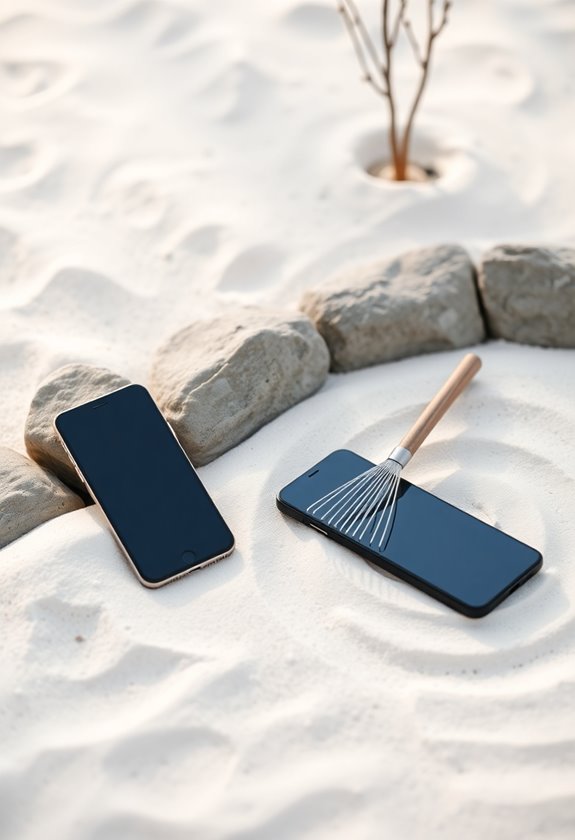
Building on your morning routine success, mastering digital boundaries becomes your next powerful step toward digital wellness. You'll need to establish clear limits for your online activities through deliberate time management and device-free zones in your home. Start by evaluating your current digital habits and identifying areas where you're feeling overwhelmed or distracted.
- Set specific hours for checking emails and social media to prevent digital overload from consuming your day
- Create phone-free spaces in your bedroom and dining area to protect your sleep and family connections
- Turn off non-essential notifications to regain control of your attention and reduce stress levels
Remember to regularly review and adjust your boundaries as needed, ensuring they're supporting your productivity while maintaining healthy relationships and mental well-being.
Prioritize Real-World Connections

Life's richest moments unfold in face-to-face interactions, not through screens. While technology connects us globally, research consistently shows that in-person connections lead to better mental health outcomes and deeper emotional fulfillment.
To prioritize real-world relationships, you'll need to create intentional boundaries with your devices. Start by designating tech-free zones during meals and implementing a digital sunset an hour before bedtime. You can strengthen your community ties by joining local clubs, participating in volunteer activities, or attending events that align with your interests. Use technology as a tool to enhance these real-world connections rather than replace them, and consider scheduling regular digital detoxes to maintain a healthy balance between online and offline life.
Frequently Asked Questions
How Do Digital Wellness Habits Affect Workplace Productivity and Career Advancement?
Your digital wellness habits directly impact your workplace success and career growth through enhanced focus and productivity. When you practice healthy tech boundaries, you'll reduce burnout and increase your attention span, potentially decreasing errors by up to 40%. By managing your digital environment effectively, you're positioning yourself for advancement opportunities while maintaining better mental health and work-life balance, which employers increasingly value in leadership roles.
Can Digital Wellness Practices Help Manage Chronic Health Conditions?
An apple a day keeps the doctor away, and digital wellness practices can be your modern health companion. You'll benefit from real-time health monitoring through wearable devices that track essential signs and alert your healthcare providers to concerning changes. Digital therapeutics and telemedicine platforms let you manage chronic conditions more effectively, while personalized health apps help you maintain treatment schedules, track symptoms, and make necessary lifestyle adjustments.
What Role Does Digital Wellness Play in Long-Term Relationships?
Digital wellness plays an essential role in strengthening your long-term relationships by helping you establish healthy tech boundaries and maintain meaningful connections. You'll find that setting designated tech-free times allows for deeper face-to-face interactions, while mindful technology use can enhance communication when you're apart. By creating a balanced approach to digital engagement, you're able to nurture intimacy while preventing screen time from interfering with your relationship's growth.
How Does Digital Wellness Differ Across Various Cultural and Socioeconomic Backgrounds?
Like a digital fingerprint unique to each person, your experience with digital wellness varies considerably based on your cultural heritage and economic circumstances. You'll find that cultural values deeply influence how you interact with technology, while your access to digital resources often depends on your socioeconomic status. If you're from a collectivist culture, you might prioritize group harmony in digital communications, whereas those from individualistic societies typically focus on personal boundaries and digital autonomy.
What Are the Financial Benefits of Implementing Digital Wellness Practices?
By implementing digital wellness practices, you'll see significant financial improvements through multiple channels. You can boost your savings by 25% using digital financial management tools, while reducing stress-related expenses and improving workplace productivity. These practices help you make better financial decisions through personalized insights, automated tracking, and thorough planning tools that integrate both short and long-term financial goals into your daily routine.