You'll get the most from retinol and vitamin C by applying them at different times of day for maximum effectiveness. Use your vitamin C serum in the morning, waiting 3-5 minutes before other products, to protect against environmental damage and brighten your complexion. Apply retinol at night, when your skin's natural repair processes are most active, to boost cell turnover and reduce fine lines. If you must use both in one routine, apply vitamin C first, wait 30 minutes, then follow with retinol. Understanding proper timing and concentration levels will help you release these powerful ingredients' full potential.
Highlights
- Apply Vitamin C in the morning and retinol at night for optimal results, or wait 30 minutes between applications if using together.
- Start with low concentrations: 0.25-0.5% retinol and 5-10% Vitamin C, then gradually increase frequency to prevent irritation.
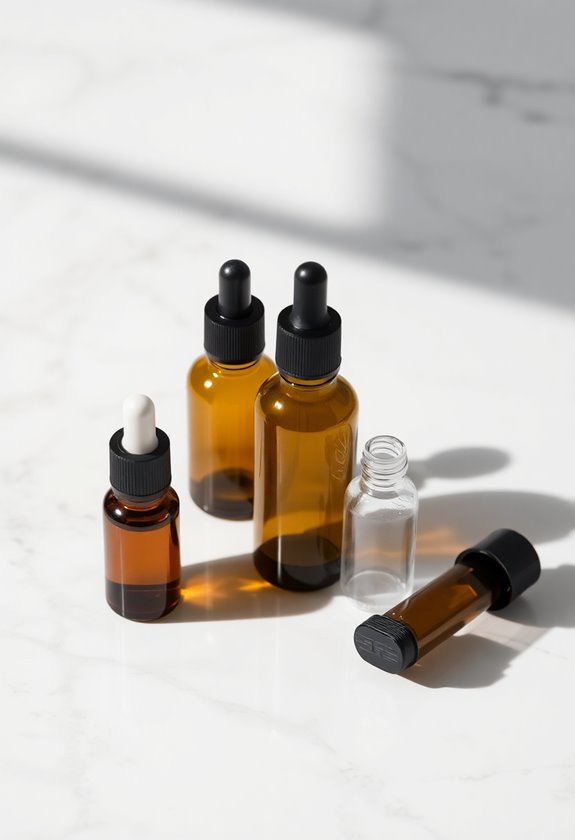
- Choose stable formulations in dark or airless containers, with L-ascorbic acid for Vitamin C and encapsulated retinol.
- When layering both products, always apply water-based Vitamin C first, followed by retinol after proper waiting time.
- Monitor skin for signs of irritation like redness or stinging, reducing usage frequency if sensitivity occurs.
Understanding Retinol and Vitamin C
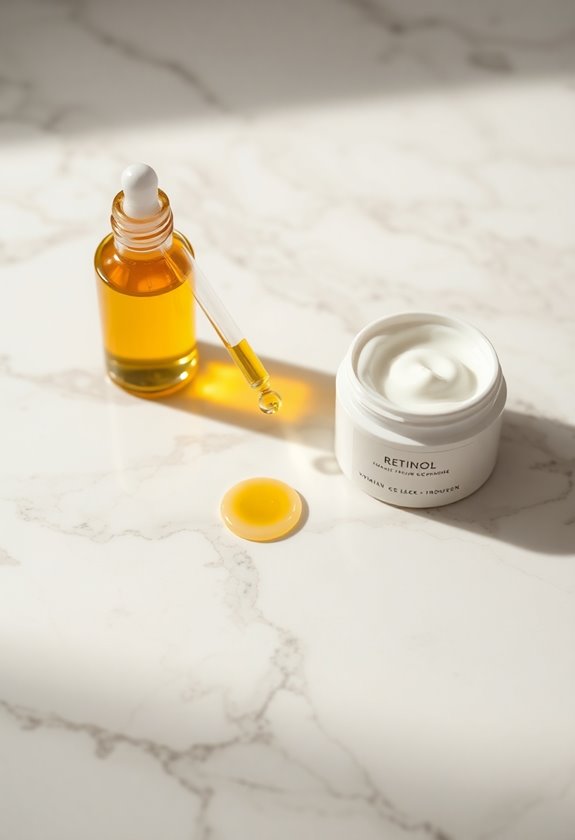
Everyone should know the basics of retinol and vitamin C before combining them in a skincare routine. These two powerhouse ingredients serve different but complementary functions in your skincare regimen, which is why they're so popular among skincare enthusiasts and dermatologists alike.
Retinol, a derivative of vitamin A, works by:
- Increasing cell turnover
- Boosting collagen production
- Reducing fine lines and wrinkles
- Improving skin texture
Vitamin C, a potent antioxidant, delivers these benefits:
- Protecting against environmental damage
- Brightening skin tone
- Fading dark spots
- Supporting collagen synthesis
You'll find retinol in both prescription and over-the-counter forms, while vitamin C comes in various derivatives like L-ascorbic acid and ascorbyl palmitate, each with different stability levels and potencies.
Benefits of Each Active Ingredient
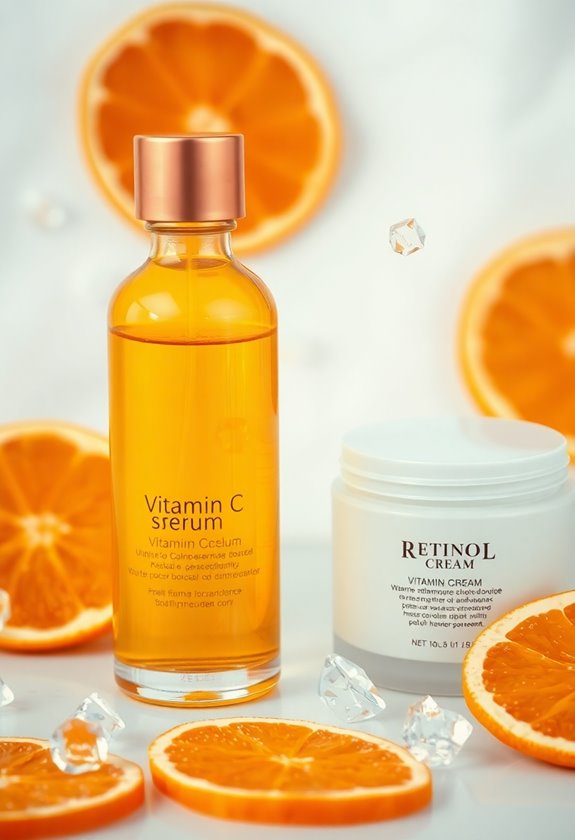
Both retinol and vitamin C offer unique advantages that make them essential in modern skincare routines. Let's explore what each ingredient brings to your skincare regimen:
Retinol Benefits:
- Speeds up cell turnover to reveal fresher, younger-looking skin
- Boosts collagen production, which helps reduce fine lines and wrinkles
- Unclogs pores and regulates oil production to combat acne
- Improves skin texture and minimizes the appearance of large pores
Vitamin C Benefits:
- Protects your skin from environmental damage and free radicals
- Brightens complexion and fades dark spots or hyperpigmentation
- Enhances skin barrier function for better moisture retention
- Supports natural collagen synthesis while reducing inflammation
- Provides antioxidant protection against UV damage when used with sunscreen
Timing Your Application
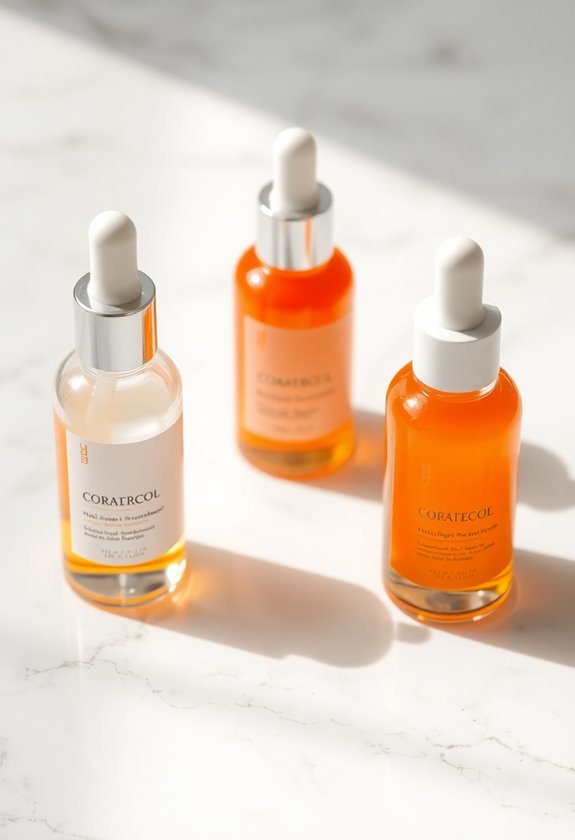
With such powerful benefits from these active ingredients, proper timing can maximize their effectiveness in your skincare routine. While you can use both products daily, it's best to separate them between morning and evening applications for ideal results.
- Apply Vitamin C in the morning to protect your skin from environmental damage throughout the day, waiting 3-5 minutes before applying sunscreen and other products.
- Use Retinol in your evening routine after cleansing, allowing it to work overnight when your skin's natural repair processes are most active.
- If you must use both in the same routine, apply Vitamin C first, wait 30 minutes, then follow with Retinol to prevent potential irritation and maintain the efficacy of both ingredients.
Best Products and Formulations

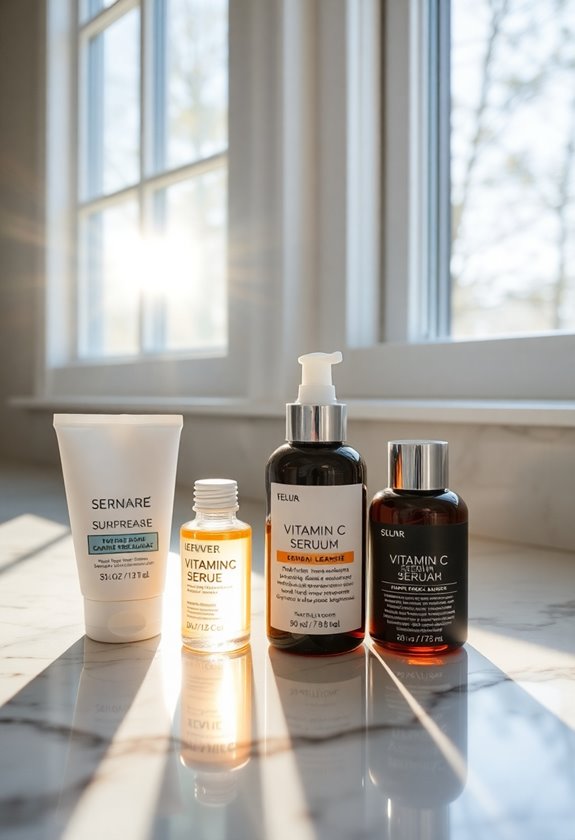
Selecting the right formulations can make or break your success with retinol and vitamin C products. When choosing your serums, you'll want to look for stable forms of vitamin C like L-ascorbic acid in concentrations between 10-20%, while retinol products should start at 0.25-0.5% for beginners. The most effective combinations often include water-based vitamin C serums paired with encapsulated retinol formulations that provide controlled release throughout the night.
- L-ascorbic acid serums in dark or airless containers to prevent oxidation
- Microencapsulated or time-release retinol products to minimize irritation
- Formulations with complementary ingredients like vitamin E and ferulic acid
- Products free from potentially irritating fragrances and essential oils
The best products will also contain supporting ingredients like hyaluronic acid and niacinamide, which help maintain your skin's moisture barrier while these active ingredients work.
Signs of Skin Irritation
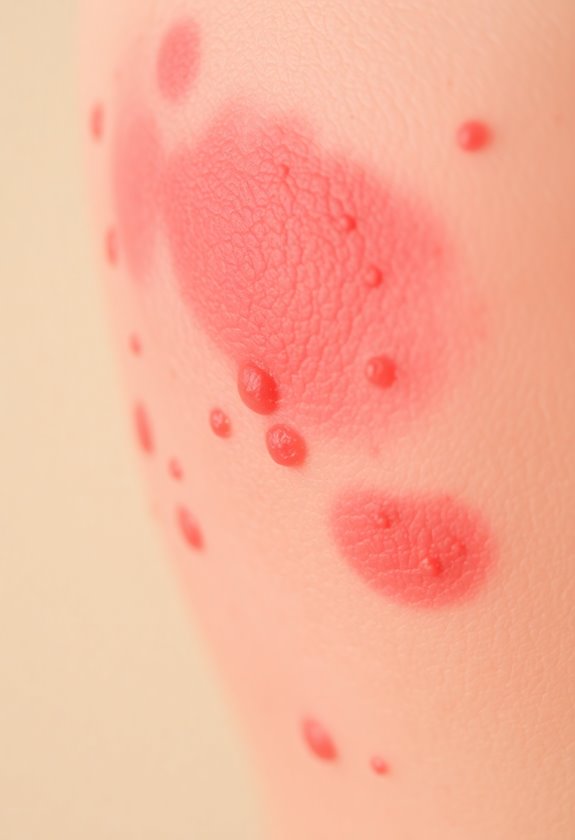
Irritation signals from combining retinol and vitamin C shouldn't be ignored, as they can indicate that your skin needs an adjusted approach. Watch for these common signs of overexfoliation or product sensitivity:
- Redness and warmth that persists beyond your usual post-application flush
- Stinging or burning sensations that don't subside within 5-10 minutes
- Unusual dryness, flaking, or a tight, uncomfortable feeling in your skin
- Small bumps or breakouts in areas where you don't typically experience them
If you're experiencing any of these symptoms, you'll need to reduce the frequency of use or separate these active ingredients into different routines. Consider using vitamin C in your morning routine and retinol at night, which will help minimize the risk of irritation while maintaining the benefits of both ingredients.
Morning Versus Evening Routines

Timing plays an essential role when layering retinol and vitamin C in your skincare routine. For ideal results, you'll
Building Skin Tolerance
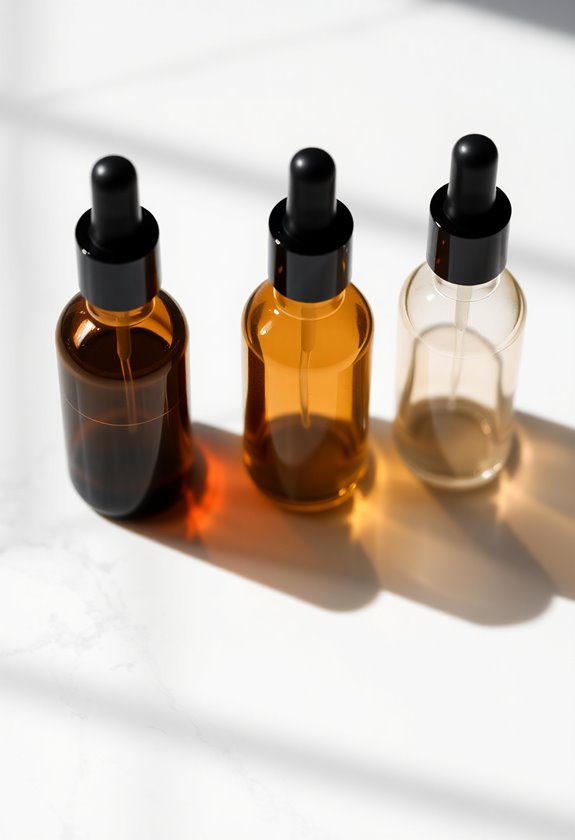
When you start using retinol and vitamin C together, your skin needs time to adjust to these powerful ingredients. Begin with a low concentration of each product, using them on alternate days to monitor how your skin responds to the combination.
- Start with retinol once or twice a week, gradually increasing to every other night
- Introduce vitamin C separately, beginning with a 5-10% concentration in the morning
- Watch for signs of irritation like redness, peeling, or increased sensitivity
- After 4-6 weeks of alternating use, you can try using both products daily if your skin shows no sensitivity
- If irritation occurs, reduce frequency and concentrate on moisturizing
Common Mistakes to Avoid
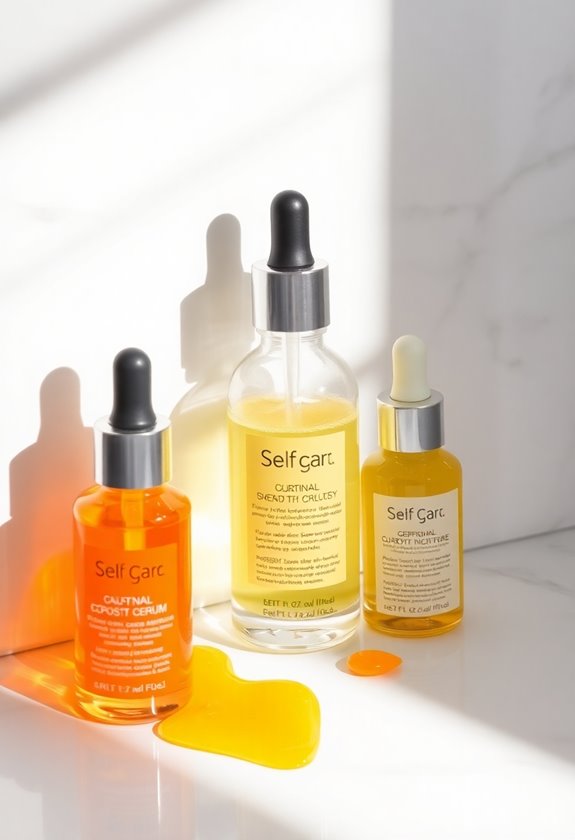
Many skincare enthusiasts make critical errors when combining retinol and vitamin C, potentially compromising their skin's health and the products' effectiveness. You'll want to understand these common pitfalls to guarantee you're getting the maximum benefits from your skincare routine while protecting your skin barrier.
- Applying both products at the same time instead of spacing them out between morning and evening routines, which can lead to increased irritation and reduced effectiveness
- Using products with incorrect pH levels that don't allow either ingredient to work properly
- Storing vitamin C and retinol products improperly by exposing them to heat, light, or air, causing premature degradation
- Rushing to combine these potent ingredients without first establishing tolerance to each one individually, which can result in excessive skin sensitivity
Frequently Asked Questions
Can Retinol and Vitamin C Be Used During Pregnancy or While Breastfeeding?
You shouldn't use retinol during pregnancy or breastfeeding, as it can potentially harm your baby's development. While topical vitamin C is generally considered safe during these periods, it's best to check with your healthcare provider first. Some doctors recommend avoiding all retinoids, including over-the-counter retinol products, until you've finished breastfeeding to guarantee your baby's safety and ideal development.
How Long Do Retinol and Vitamin C Products Typically Last Before Expiring?
Like precious gems losing their sparkle, skincare products don't last forever. You'll typically find that vitamin C serums remain stable for 3-6 months after opening, while retinol products usually maintain their potency for 6-12 months. You can extend their shelf life by storing them in dark, airtight containers away from direct sunlight and heat, as these factors can speed up oxidation and degradation.
Should You Apply These Products on Wet or Dry Skin?
You'll want to apply both retinol and vitamin C products to completely dry skin for maximum effectiveness and minimal irritation. When you apply these active ingredients to wet skin, they can penetrate too quickly and potentially cause sensitivity, while moisture can also dilute their potency. Wait about 30 seconds after cleansing to guarantee your skin is thoroughly dry before applying either product.
Can Retinol and Vitamin C Be Used on the Neck and Décolletage Area?
Just as your face is a canvas for skincare, your neck and décolletage deserve the same artistic attention. You can absolutely use retinol and vitamin C on these areas, but you'll want to be extra careful since the skin here is more delicate than facial skin. Start with a lower concentration of both ingredients and gradually increase frequency, always following with sunscreen during the day to protect these sensitive zones from UV damage.
Do Natural Versions of Retinol and Vitamin C Work as Effectively?
Natural alternatives like bakuchiol (a retinol alternative) and rosehip oil can provide some benefits, but they're generally less potent than synthetic versions. While you'll find vitamin C in sources like kakadu plum and sea buckthorn, they don't match the concentrated effectiveness of L-ascorbic acid. If you're seeking the most dramatic skincare results, you'll want to stick with scientifically formulated retinol and vitamin C products.