You can combat screen fatigue with simple eye exercises that provide quick relief during your workday. Practice the 20-20-20 rule by looking at something 20 feet away for 20 seconds every 20 minutes. Strengthen your eye muscles with basic movements: look up and down, left and right, and trace diagonal patterns. Try palming by rubbing your hands together and placing them over closed eyes for instant comfort. Combine these exercises with proper workspace setup, including monitor positioning and anti-glare protection. These natural techniques will help protect your vision, and there's much more you can do to enhance your eye health.
Highlights
- Practice the 20-20-20 rule: every 20 minutes, look at something 20 feet away for 20 seconds to reduce eye strain.
- Roll your eyes in circular motions clockwise and counterclockwise to release tension and improve eye muscle flexibility.
- Alternate focusing between near and far objects to strengthen eye muscles and reduce screen-related fatigue.
- Perform palming exercises by covering closed eyes with warm palms to relax tired eye muscles.
- Complete basic eye movements in all directions while keeping your head still to strengthen eye muscles.
Understanding Digital Eye Strain
Digital eye strain, a modern-day epidemic, affects countless people who spend long hours in front of screens. You're likely to experience symptoms like blurred vision, eye discomfort, and dryness when you've been using digital devices for two or more hours, especially if you have underlying vision problems like astigmatism or presbyopia. The average American worker devotes seven hours daily to computer screens.
Your discomfort isn't limited to just your eyes – you'll often notice neck pain, shoulder tension, and backaches developing from prolonged screen time. If you're experiencing visual discomfort, burning sensations, or eye irritation, you're dealing with classic signs of digital eye strain that shouldn't be ignored. Children are particularly vulnerable to this condition, and they might show signs through reduced attention span, irritability, and behavioral changes when spending excessive time with digital devices.
Essential Eye Movement Exercises

Performing regular eye movement exercises can greatly reduce screen-related fatigue and improve your overall visual comfort. You'll want to incorporate basic movements like slowly moving your eyes up and down, left and right, and in diagonal patterns to strengthen your eye muscles. For focused training, try the 20-20-20 rule: every 20 minutes, look at something 20 feet away for 20 seconds. Tracing imaginary shapes while keeping your head still can significantly enhance eye coordination and muscle control.
You can enhance your eye coordination through exercises like pencil pushups and the Brock string method, which help train both eyes to work together effectively. Don't forget to include relaxation techniques in your routine – try palming by covering your closed eyes with warm hands, and practice frequent blinking to keep your eyes moisturized and comfortable during screen time.
Quick Relief Eye Techniques

Relieving eye strain doesn't have to be time-consuming or complicated. You can perform several quick techniques throughout your day to give your eyes immediate relief and comfort.
– Try warm palming by rubbing your hands together until they're heated, then gently place them over your closed eyes without applying pressure.
Regular exposure to morning sunlight can naturally strengthen your eye health.
- Apply a cold compress using a clean cloth dipped in cool water, or use a warm compress to relax tense eye muscles.
- Practice the blinking exercise by rapidly blinking for a few seconds, followed by keeping your eyes closed for a moment of rest.
- Give your eyes a break with distance gazing, where you'll focus on far-away objects to reduce muscle strain.
- Use eye cupping by creating a gentle suction with your palms over closed eyes for immediate tension relief.
Workspace Setup For Eye Health
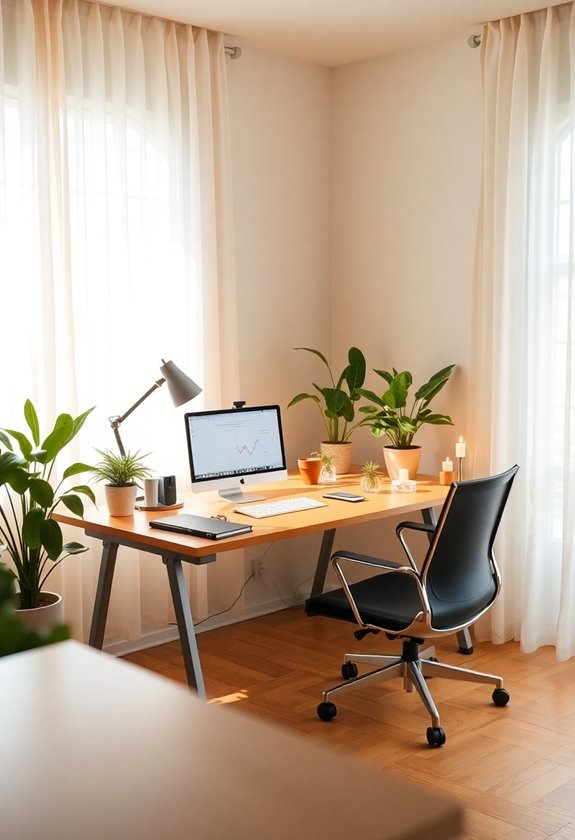
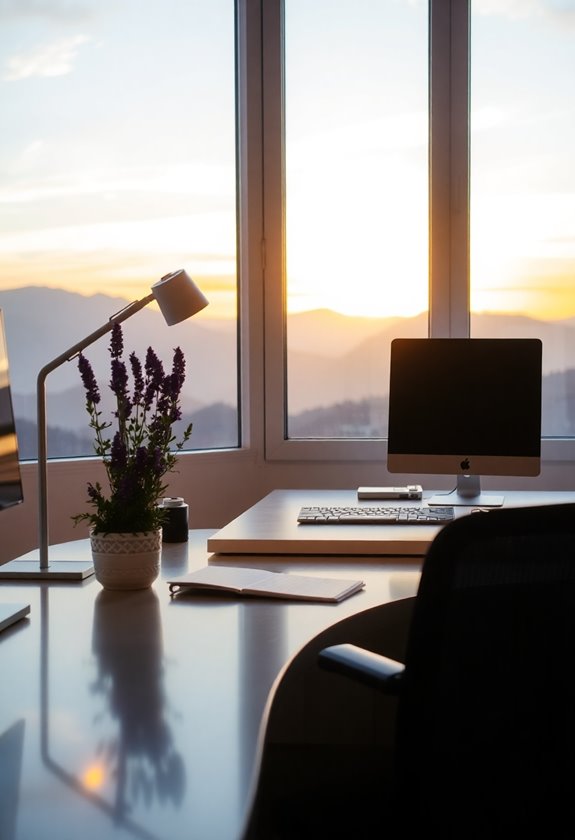
A well-designed workspace can greatly impact your eye health and overall productivity. You'll want to start by positioning your desk near a window to maximize natural light while using anti-glare coatings to prevent harsh reflections that can strain your eyes.
Set up your monitor at arm's length with the top of the screen slightly below eye level, and don't forget to install an anti-glare filter to reduce eye strain. Your chair should support proper posture, keeping your feet flat on the floor and your arms at a 90-degree angle. Consider using a sit-stand desk option to promote movement throughout your workday. When it comes to lighting, combine soft, diffused overhead illumination with adjustable task lighting to create ideal viewing conditions.
Remember to implement the 20-20-20 rule throughout your day, and keep your screen clean to maintain clear visibility without unnecessary strain.
Daily Eye Strengthening Routines
Regular eye exercises can greatly improve your vision strength and reduce eye strain throughout the day. You'll want to start with basic flexing exercises, looking up, down, left, and right while keeping your head still, followed by the figure-of-eight movement to enhance flexibility. Remember to blink every 5 seconds when working at your computer to maintain natural eye moisture.
Practice the 20-20-20 rule during your workday by taking a 20-second break every 20 minutes to focus on something 20 feet away. Incorporate near and far focusing exercises by alternating your gaze between close objects and distant ones, and don't forget to perform eye rolling in circular motions to release tension. When you're feeling particularly strained, try palming by covering your closed eyes with your warm hands, or practice the butterfly exercise by gently opening and closing your eyelids 20 times.
Screen Time Management Strategies

While eye exercises strengthen your vision, managing screen time plays an equally important role in maintaining eye health. You'll need to implement specific strategies to protect your eyes from digital strain throughout your day.
- Set up screen-free zones in your home and workplace, especially in bedrooms where devices can interfere with rest
- Use built-in features or apps to track and gradually reduce your daily screen time
- Schedule regular breaks during screen activities, following a structured timing approach
- Turn off unnecessary notifications that pull your attention back to screens
- Replace excessive screen time with physical activities or non-digital hobbies
Don’t use screen time as a reward system; instead, create a balanced routine that includes designated periods for both necessary screen work and screen-free activities. Encourage physical activity, hobbies, and outdoor play as part of the screen-free portion of the routine. Consider incorporating mindfulness practices and anxiety relief tips to help manage stress and promote overall well-being. By establishing a balanced routine, you can help your family develop healthy habits and reduce the negative effects of excessive screen time.
Blue light glasses can provide an additional layer of protection against digital eye strain when combined with proper screen management habits.
Eye Relaxation Methods

Implementing effective eye relaxation methods can provide immediate relief from visual strain and fatigue. You'll find that simple techniques like palming, where you cup warm hands over closed eyes while breathing deeply, can quickly soothe tired eyes and reduce tension.
Start by rubbing your palms together to generate heat, then place them gently over your closed eyes while sitting comfortably at your desk. You can enhance this relaxation by incorporating gentle eye socket massages, using your fingertips to make circular motions beneath your eyebrows. When you're feeling particularly strained, try the gaze-into-darkness technique by placing your elbows on a table, covering your eyes with your palms, and allowing yourself to relax while focusing on the darkness for two minutes.
Preventive Eye Care Habits
Taking proactive steps to protect your vision can prevent many common eye problems before they start. You'll want to make regular hand-washing a daily habit and guarantee you're wearing proper eye protection when outdoors, including UV-protective sunglasses throughout the year.
Keep your contact lenses and glasses clean, and don't forget to stay hydrated by drinking plenty of water throughout the day. You're also going to need regular eye check-ups at least every two years, especially if you've got a family history of eye disease or conditions like diabetes. When it comes to your diet, include foods rich in vitamins A, C, and E, along with omega-3 fatty acids from fish, eggs, and whole grains, which can greatly reduce your risk of developing cataracts and macular degeneration.
Long Term Vision Protection

Beyond daily eye care habits, long-term vision protection requires a thorough strategy that combines dietary choices, lifestyle adjustments, and preventive measures. You'll need to prioritize leafy greens like kale and spinach, which provide essential antioxidants such as lutein and zeaxanthin to protect your eyes from cellular damage.
To safeguard your vision effectively, you'll want to wear polarized sunglasses with 100% UV protection throughout all seasons, especially when snow reflects harmful rays. Don't forget to manage your overall health by maintaining healthy blood sugar levels and blood pressure, as these conditions can greatly impact your eye health. You should also schedule regular extensive eye exams, which can detect potential issues before they become serious problems, particularly if you have a family history of eye conditions.
Frequently Asked Questions
Can Eye Exercises Permanently Improve Vision or Reverse Existing Eye Conditions?
You might be hoping that eye exercises could be your solution to better vision, but here's the reality: they can't permanently improve or reverse existing eye conditions like presbyopia, myopia, or hyperopia. While you'll find these exercises helpful in reducing eye strain and improving eye coordination, they're not a substitute for corrective lenses or medical treatment. You should work with your optometrist to address vision problems properly.
How Soon After Starting Eye Exercises Can Improvements Be Noticed?
You'll likely notice initial relief from eye strain within the first few days of starting eye exercises, especially with practices like blinking and palming. While immediate benefits include reduced dryness and fatigue after each session, more substantial improvements in focusing ability and eye flexibility typically develop over several weeks of consistent practice. Your individual results may vary based on factors like screen time, age, and overall eye health.
Are Eye Exercises Safe During Pregnancy or With Specific Eye Conditions?
Like a gentle morning stretch awakens your body, most eye exercises are safe during pregnancy, but you'll need to take precautions. If you've got specific eye conditions, consult your doctor before starting any exercises. You can safely do basic movements like blinking and palming, but avoid strenuous exercises if you have glaucoma or high blood pressure. Always listen to your body and stop if you experience discomfort, blurred vision, or unusual symptoms.
Should Children Perform Eye Exercises While Their Vision Is Still Developing?
Yes, you should encourage your children to perform age-appropriate eye exercises while their vision develops, as they can help strengthen eye muscles and improve coordination. When introducing exercises, start with simple techniques like blinking and eye rolling, then progress to more complex activities that enhance focusing abilities. However, it's crucial to consult your child's eye doctor first and verify exercises are done correctly to support healthy visual development.
Can Eye Exercises Help With Night Vision and Light Sensitivity Issues?
Studies show that dedicated eye exercises can improve your low-light vision by up to 30% over time. You'll find that exercises like palming and focus alternation can enhance your night vision capabilities by strengthening eye muscles and improving pupil response. When it comes to light sensitivity, consistent practice of sunning exercises and contrast bathing can help your eyes adapt more effectively to varying light conditions.