

You can improve your posture and reduce workplace discomfort with these targeted office chair exercises. Start with shoulder blade squeezes to correct rounded shoulders, followed by gentle chair twists for spinal mobility. Incorporate seated cat-cow stretches to release tension, and practice neck rolls to ease upper body strain. Add core engagement holds to strengthen your trunk muscles, while upper back extensions combat slouching. Don't forget ankle and wrist circles to maintain circulation during long sitting periods. These exercises, performed regularly throughout your workday, create lasting postural improvements. Discover specific techniques and durations to maximize your results.
Highlights
- Shoulder blade squeezes strengthen back muscles and correct rounded shoulders through 10-15 repetitions performed 2-3 times daily.
- Seated cat-cow stretches improve spinal mobility by alternating between arching and rounding the back for 8-10 repetitions.
- Chair twists release spinal tension and strengthen core muscles by rotating the torso while seated for 15-30 seconds per side.
- Core engagement holds improve posture by drawing the navel toward spine while sitting tall for 15-30 seconds intervals.
- Upper back extensions combat desk fatigue by interlacing fingers behind head and gently arching backward for 10-15 seconds.
Shoulder Blade Squeezes
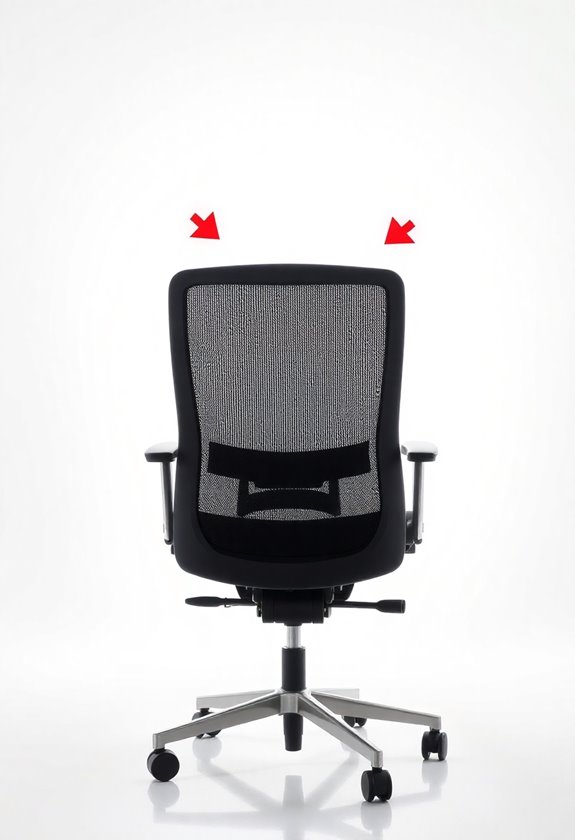
Drawing your shoulders back and engaging your upper back muscles, shoulder blade squeezes help correct rounded shoulders and poor desk posture. You'll strengthen your rhomboids and trapezius muscles while creating muscle memory for proper alignment throughout your workday.
To perform this exercise:
- Sit tall in your chair with feet flat on the floor
- Let your arms hang naturally at your sides
- Pull your shoulder blades together as if you're squeezing a pencil between them
- Hold the squeeze for 5-10 seconds while continuing to breathe normally
- Release slowly and return to the starting position
- Repeat 10-15 times, performing 2-3 sets throughout your day
You'll feel a gentle stretch across your chest while your upper back muscles activate and strengthen, helping to counteract the forward-slouching position that's common with desk work.
Using an ergonomic mouse position during this exercise can further enhance your overall desk posture and comfort.
Seated Cat-Cow Stretch
This gentle seated adaptation of the classic yoga pose effectively releases tension in your spine while improving mobility throughout your workday.
- Start by sitting tall in your chair with both feet planted firmly on the ground, and place your hands on your thighs.
- For the "Cat" position, round your spine by pulling your navel toward your spine while tucking your chin to your chest and rolling your shoulders forward.
- To move into the "Cow" position, arch your back while lifting your chest and chin, allowing your belly to move forward as your shoulders roll back.
- Alternate between these two positions slowly, spending 2-3 seconds in each stretch while coordinating your breath – exhale during Cat, inhale during Cow.
- Repeat this flowing movement 8-10 times to improve spinal flexibility and reduce stiffness.
Using an adjustable footrest during this exercise can help maintain proper leg positioning and enhance overall comfort while stretching.
Chair Twists
Like a gentle wringing of a towel, chair twists provide a revitalizing way to release tension in your spine while strengthening your core muscles. You'll find this exercise particularly effective when you've been sitting for extended periods, as it helps realign your vertebrae and increase mobility in your upper body.
- Sit tall in your chair with both feet planted firmly on the ground, hip-width apart
- Place your right hand on the left armrest or seat edge while positioning your left hand on the back of the chair
- Inhale deeply to lengthen your spine, then exhale as you twist your torso toward the left
- Hold the position for 15-30 seconds while maintaining steady, controlled breathing
- Release slowly and repeat on the opposite side, performing 3-5 twists per side
Neck Rolls and Tilts
Whether you're typing away at your desk or attending endless virtual meetings, your neck often bears the burden of poor posture habits. You can combat this tension with simple neck rolls and tilts performed right in your office chair.
- Start by sitting tall with your shoulders relaxed, then slowly drop your right ear toward your right shoulder, holding for 10 seconds.
- Gently roll your head forward, bringing your chin to your chest, then continue the motion toward your left shoulder.
- Complete the circle by rolling your head back to center, being careful not to tilt too far backward.
- Repeat this fluid motion 5-10 times in each direction, and if you feel any pain or discomfort, stick to gentle side-to-side tilts instead of full rolls.
Ankle and Wrist Circles
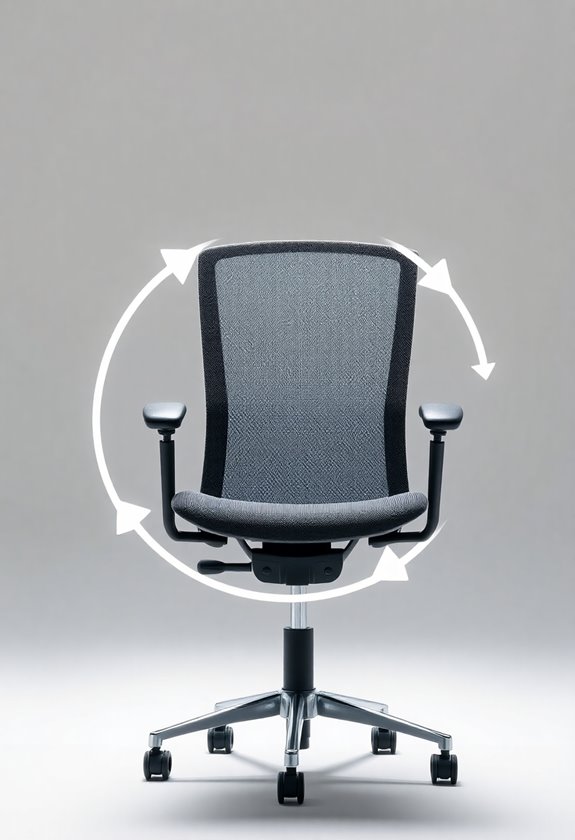
Sitting for long periods can restrict blood flow and create stiffness in your wrists and ankles. Regular circular movements of these joints will help maintain flexibility and reduce the risk of repetitive strain injuries while improving circulation throughout your extremities.
- Rotate your ankles clockwise 10 times, then counterclockwise 10 times while keeping your foot elevated
- Roll your wrists in wide circles, maintaining smooth, controlled movements for 30 seconds in each direction
- Flex your fingers wide, then make a tight fist, repeating this motion 15 times
- Point your toes down, then flex them up, holding each position for 3 seconds
- Combine ankle and wrist circles simultaneously to maximize your time and efficiency
You'll want to perform these exercises every two hours during your workday to maintain joint mobility and prevent stiffness from setting in. Using anti-fatigue mats while standing can provide additional comfort and support during these exercises.
Hip Flexor Release
Your hip flexors endure constant tension during long hours at your desk, leading to tightness that can cause poor posture and lower back pain. To release this tension, you'll need to perform a simple seated stretch that targets these muscles directly.
- Sit at the edge of your chair with both feet flat on the floor
- Extend your right leg behind you, keeping your toe pointed and heel raised
- Tuck your tailbone under and engage your core while maintaining an upright posture
- Gently lean forward until you feel a stretch in the front of your right hip
- Hold this position for 30 seconds while taking deep breaths
- Switch legs and repeat the stretch on your left side
- Perform this stretch 2-3 times per leg throughout your workday
Desk Push-Ups
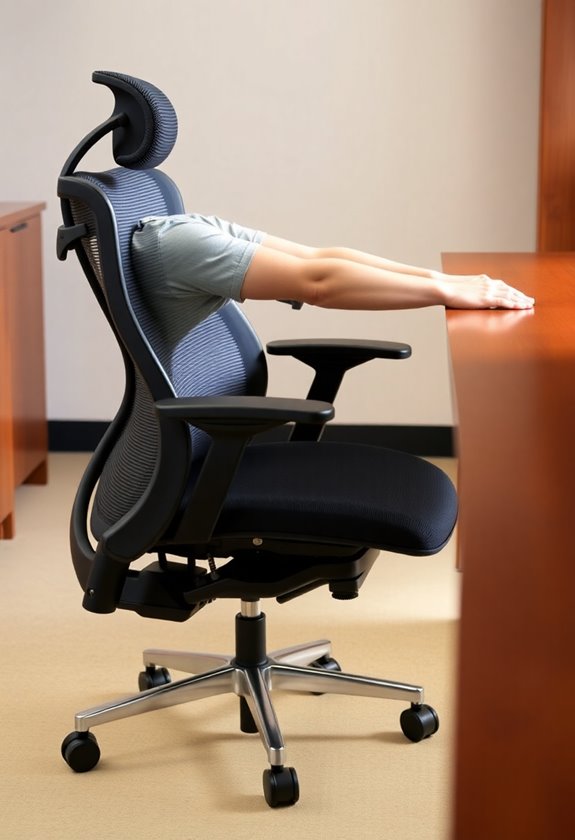
Desk push-ups offer a convenient way to strengthen your upper body and improve posture while taking quick breaks from work. You'll engage your chest, shoulders, and core muscles while building strength in the areas that often become weak from prolonged sitting.
- Stand about arm's length from your desk with your feet shoulder-width apart
- Place your hands firmly on the desk's edge, slightly wider than your shoulders
- Keep your body straight, engage your core, and lower your chest toward the desk
- Push yourself back up to the starting position while maintaining proper alignment
- Perform 2-3 sets of 10-15 repetitions, adjusting the angle to match your strength level
Remember to breathe steadily throughout the exercise, and you'll want to verify your desk is stable and sturdy before beginning these modified push-ups.
Seated Hamstring Stretch
After strengthening your upper body, it's time to address one of the most common problem areas for office workers: tight hamstrings. These muscles can become shortened and stiff when you're sitting for long periods, contributing to poor posture and lower back pain.
Using an ergonomic keyboard setup can help maintain proper alignment while performing these stretches at your desk.
To perform the seated hamstring stretch:
- Remain seated at the edge of your chair with your feet flat on the floor
- Extend your right leg forward with your heel on the ground and toes pointing up
- Keep your back straight and chest lifted as you hinge forward from your hips
- You'll feel a stretch along the back of your thigh; hold for 30 seconds
- Switch to your left leg and repeat the same movement
- Perform this stretch 2-3 times per leg, making sure you're breathing steadily throughout
Core Engagement Holds
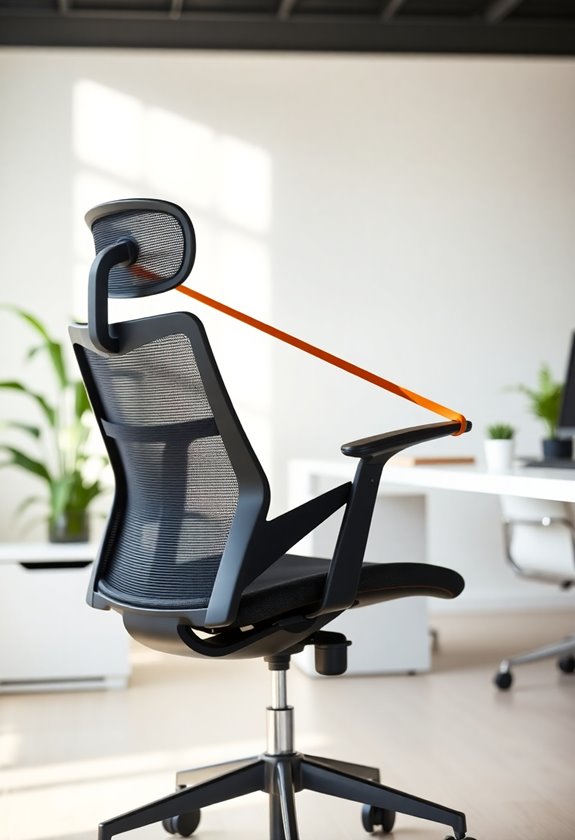
From your seated position, maintaining a strong core is essential for proper posture and spinal alignment during long office hours. You'll want to practice these holds throughout your workday, engaging your abdominal muscles while continuing to breathe normally through each movement.
- Sit tall at the edge of your chair, placing both feet firmly on the ground shoulder-width apart
- Draw your navel toward your spine while keeping your shoulders relaxed and down
- Hold this engaged position for 15-30 seconds while maintaining normal breathing patterns
- Imagine a string pulling the crown of your head toward the ceiling as you maintain the hold
- Release the hold gently, rest for 10 seconds, and repeat this sequence 3-5 times every hour
Try to incorporate these core engagement holds between tasks, gradually increasing your hold time as your strength improves.
Upper Back Extensions
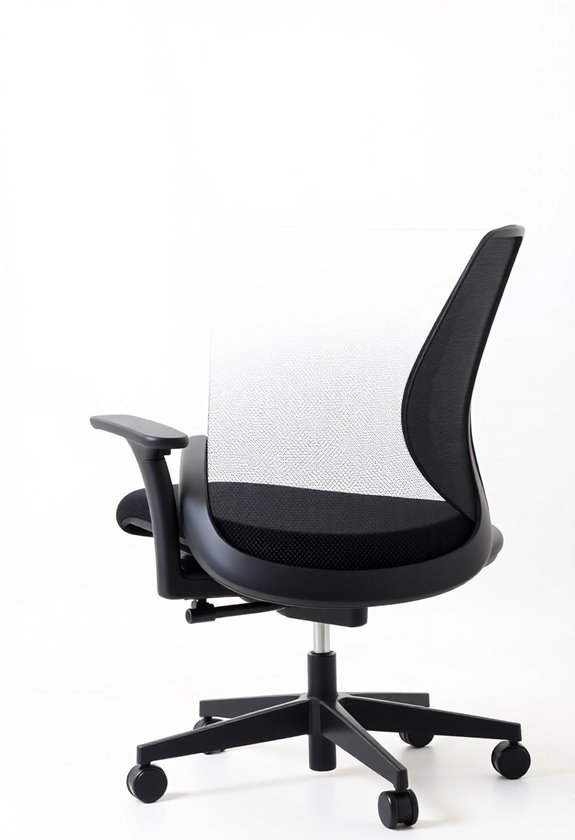
While core engagement strengthens your center, upper back extensions target the muscles that commonly weaken during prolonged sitting. You'll need to sit upright in your chair with your feet flat on the floor to perform this essential posture-correcting exercise.
- Interlace your fingers behind your head, keeping your elbows pointed outward.
- Draw your shoulder blades together while gently arching your upper back.
- Hold this position for 10-15 seconds while maintaining controlled breathing.
- Slowly release and repeat 5-8 times, taking care not to strain your neck.
You'll feel a stretch across your chest and between your shoulder blades as you strengthen the muscles that help maintain proper posture throughout your workday. Remember to perform these extensions every 2-3 hours for ideal results.
Frequently Asked Questions
How Long Should I Perform These Exercises Each Day for Best Results?
Like tending a garden, your posture needs daily care to flourish. You'll want to dedicate 10-15 minutes each day to these exercises, breaking them into 2-3 sessions spread throughout your workday. For best results, perform each movement for 30-45 seconds, taking brief pauses between sets. When you're first starting, begin with 5-minute sessions and gradually increase your duration as your strength and flexibility improve.
Can These Exercises Help With Existing Back Pain Conditions?
These exercises can help manage existing back pain, but you'll need to approach them carefully and consult your healthcare provider first. While gentle stretching and strengthening movements may reduce discomfort and improve spinal support, certain conditions might require modified techniques. You'll find the most success by starting slowly and listening to your body's signals, gradually increasing intensity as your pain levels allow.
Should I Feel Any Pain While Doing Office Chair Exercises?
While experiencing some muscle awareness during exercises is normal, you shouldn't feel actual pain. If discomfort moves beyond a gentle stretch or mild tension, you're likely pushing too hard or performing the movement incorrectly. Stop immediately if you feel sharp, shooting, or intense pain, and adjust your technique or consult a healthcare provider before continuing your exercise routine.
At What Time During Work Hours Is Best to Do These?
You'll get the most benefit by doing these exercises during natural breaks in your workday, ideally every 2-3 hours. Schedule them during less busy periods like mid-morning (around 10 AM) and mid-afternoon (around 2-3 PM) when your energy typically dips. If you're in back-to-back meetings, you can incorporate quick stretches during short breaks, and it's especially effective to do them right after lunch when your muscles might feel stiff.
Do I Need Any Special Type of Office Chair for These Exercises?
You don't need a special chair for most office posture exercises, as they're designed to work with standard office chairs that have basic adjustability features. While an ergonomic chair with good lumbar support can enhance your overall comfort, any chair that's stable and allows you to sit with your feet flat on the floor will work effectively for basic stretches and strengthening movements.


