You can transform your patchy beard into fuller facial hair through ten proven solutions. Start by optimizing your diet with biotin-rich foods and taking targeted supplements like vitamin D and zinc. Establish a consistent grooming routine with proper trimming techniques and daily beard oil application. Focus on lifestyle factors including quality sleep, stress reduction, and regular exercise to boost testosterone levels. Apply growth-stimulating oils like castor and jojoba while maintaining proper skin exfoliation. Master strategic styling to conceal sparse areas, and implement weekly progress tracking through photos. Understanding the complete approach will help you maximize your beard's potential.
Highlights
- Maintain a consistent diet rich in biotin, vitamins, and proteins through eggs, lean meats, and fish to support fuller beard growth.
- Apply beard oil containing jojoba or castor oil daily, massaging into patchy areas to stimulate follicles and improve coverage.
- Keep beards longer in sparse areas and use strategic trimming techniques to create the appearance of fuller facial hair.
- Get 7-9 hours of quality sleep nightly to optimize hormone production and natural beard growth cycles.
- Take targeted supplements including Biotin (2,500-5,000 mcg), Vitamin D (1,000-4,000 IU), and Zinc (11 mg) daily.
Optimize Your Diet

While genetics play a major role in beard growth, proper nutrition can greatly improve your facial hair's thickness and coverage. You'll need to focus on key nutrients that support healthy hair growth and hormone production throughout your body.
Essential nutrients for better beard growth include:
- Biotin and B-vitamins to strengthen hair follicles
- Protein to provide the building blocks for hair growth
- Vitamins A, C, and E for healthy skin and follicle function
- Zinc and iron to support testosterone production
- Omega-3 fatty acids to reduce inflammation and promote growth
Make sure you're eating plenty of eggs, lean meats, fish, nuts, leafy greens, and colorful vegetables to get these nutrients naturally. If you can't meet your needs through diet alone, consider taking a daily multivitamin specifically formulated for hair growth.
Master Proper Grooming Techniques
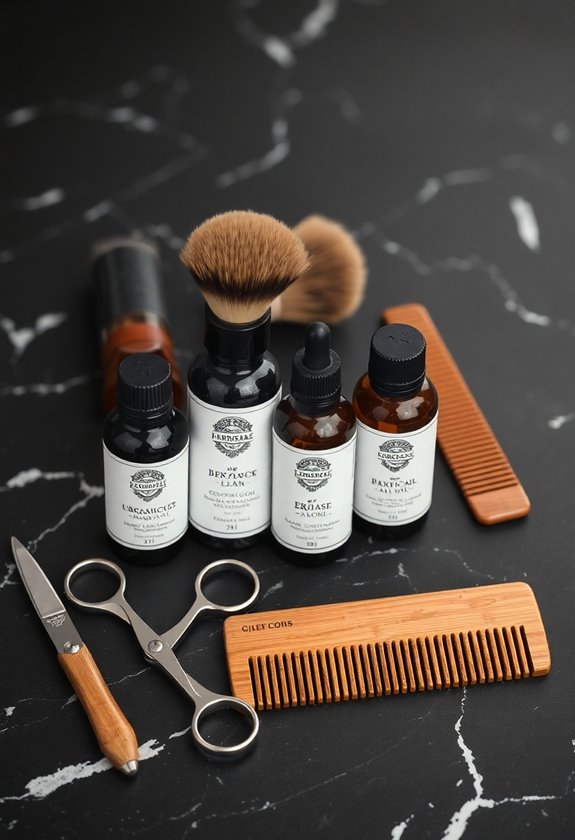
Mastering proper grooming techniques can transform a patchy beard into a more polished, fuller-looking appearance. You'll need to establish a consistent grooming routine that includes daily brushing with a boar bristle brush to train your facial hair growth patterns.
- Trim your beard every 2-3 weeks using proper beard scissors, maintaining an even length that helps conceal patchy areas.
- Use a quality beard oil after showering to moisturize the skin and soften coarse hair.
- Brush your beard downward and outward from multiple angles to create the illusion of density.
- Clean your neckline regularly, creating a defined edge about two fingers above your Adam's apple.
- Consider using a beard balm with beeswax to style and hold stray hairs in place, helping minimize the appearance of patches.
Selecting premium beard oils with natural ingredients can significantly improve your facial hair's health and manageability.
Take Essential Beard Supplements

Beyond grooming practices, proper nutrition and supplementation can greatly boost your beard's growth potential. You'll want to focus on these key supplements that have shown promising results for facial hair growth:
- Biotin (Vitamin B7): Take 2,500-5,000 mcg daily to strengthen hair follicles and promote thicker growth
- Vitamin D: Supplement with 1,000-4,000 IU daily to activate dormant hair follicles
- Zinc: Include 11 mg daily to support healthy testosterone levels and hair growth
- MSM (Methylsulfonylmethane): Add 1,000 mg to improve keratin production and hair strength
Remember to combine these supplements with a protein-rich diet that includes plenty of eggs, fish, and leafy greens, which provide the building blocks your body needs to generate new facial hair growth.
Apply Growth-Stimulating Oils
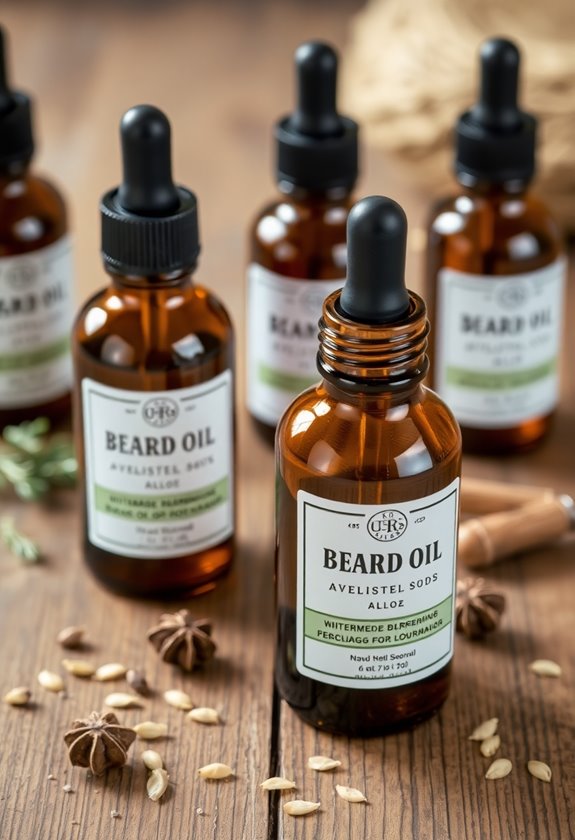
Natural oils can greatly boost your beard's growth when applied directly to patchy areas. When you're choosing beard oils, look for products containing jojoba oil, castor oil, or argan oil, which are proven to stimulate hair follicles and encourage growth in sparse regions.
To apply these oils effectively, you'll want to follow a consistent routine that maximizes their absorption and effectiveness:
- Massage 4-5 drops into clean, slightly damp facial hair twice daily
- Focus on patchy spots using circular motions for 2-3 minutes
- Leave the oil on for at least 30 minutes before washing
- Combine with a derma roller treatment once weekly for enhanced results
For best results, you'll need to maintain this regimen for at least 8-12 weeks while documenting your progress with weekly photos.
Exfoliate Dead Skin Cells

Regular exfoliation plays an essential role in promoting healthier beard growth by removing dead skin cells and unclogging hair follicles. You'll want to establish a consistent routine of gentle exfoliation 2-3 times per week using these proven methods:
- Use a soft-bristled brush in circular motions to remove buildup and stimulate blood flow beneath your facial hair, which can help activate dormant follicles.
- Apply a facial scrub containing natural ingredients like jojoba beads or ground apricot kernels, working it carefully into your skin and beard area.
- Consider using a chemical exfoliant with salicylic acid or glycolic acid, which can penetrate deeper into the skin to clear blocked pores and promote better hair growth patterns.
Remember to moisturize immediately after exfoliating to prevent skin irritation and maintain proper hydration levels.
Improve Sleep Quality

Quality sleep serves as your beard's secret weapon for ideal growth, as hormones essential for facial hair development are primarily released during deep sleep cycles. You'll need to aim for 7-9 hours of uninterrupted sleep each night to maximize testosterone and DHT production, which directly influence your facial hair's thickness and coverage patterns.
Using sleep headphones can help block out disruptive noise and create optimal conditions for deep, restorative sleep.
To optimize your sleep for better beard growth:
- Set a consistent bedtime and wake-up schedule, even on weekends
- Keep your bedroom cool (65-68°F) and completely dark
- Avoid blue light from electronic devices at least one hour before bed
- Use breathable bedding and a supportive pillow to prevent night sweats
- Consider using a sleep-tracking app to monitor your deep sleep phases
Exercise for Better Growth

Working out consistently triggers a surge in testosterone levels, which plays an essential role in developing fuller facial hair growth. You'll want to focus on compound exercises that engage multiple muscle groups simultaneously, such as squats, deadlifts, and bench presses.
To maximize your beard-boosting potential through exercise, follow these key strategies:
- Perform strength training 3-4 times per week, focusing on heavy weights with proper form
- Include high-intensity interval training (HIIT) to spike testosterone production naturally
- Maintain workout sessions between 45-60 minutes to prevent cortisol levels from rising too high
- Stay hydrated during exercises to support ideal hormone production
- Allow proper recovery time between workouts, as overtraining can actually decrease testosterone levels
Remember to combine your exercise routine with proper nutrition and rest for the best results.
Reduce Stress Levels

A man's stress levels can greatly impact his beard growth by disrupting hormone balance and reducing testosterone production. When you're constantly under stress, your body releases cortisol, which interferes with the natural growth cycle of your facial hair and can lead to patchy areas in your beard. You'll need to implement effective stress management techniques to support healthier beard growth and maintain ideal hormone levels.
- Practice daily meditation or deep breathing exercises for at least 15 minutes to lower cortisol levels and promote better circulation to hair follicles
- Schedule regular physical activity that you enjoy, such as walking, swimming, or cycling, to reduce stress and boost testosterone naturally
- Confirm you're getting 7-9 hours of quality sleep each night, as proper rest helps regulate stress hormones and supports healthy beard growth patterns
Style Around Patchy Areas
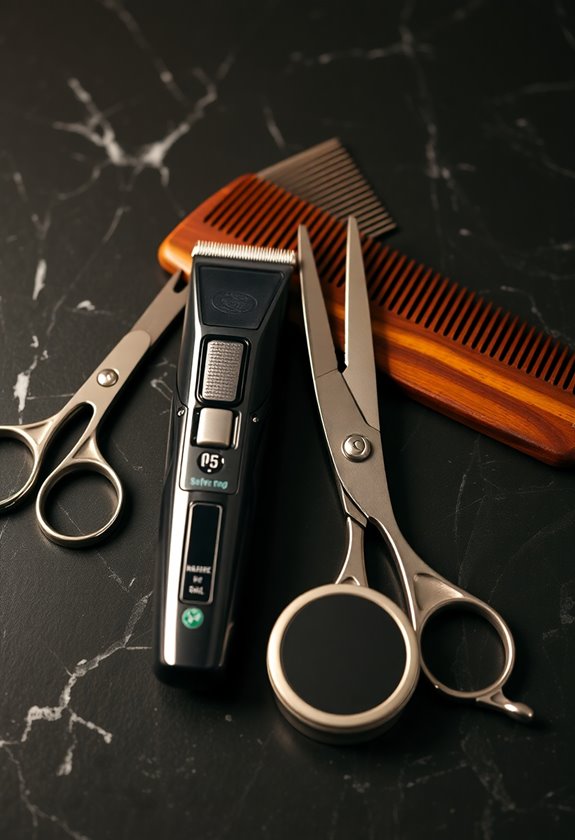
Smart styling techniques can help conceal patchy beard areas while you work on improving growth. You'll want to focus on strategic trimming and shaping to create the illusion of fuller coverage.
Keep your beard at a medium length where it's fullest, which helps blend into sparser areas more naturally. When you're trimming, maintain slightly longer lengths in patchy spots to maximize coverage, while keeping thicker areas well-groomed and defined. Consider these key styling approaches:
- Fade the neckline gradually instead of creating harsh lines
- Use a beard brush to train hair growth toward patchy spots
- Keep sideburns slightly fuller to balance uneven cheek growth
- Trim dense areas shorter to match the volume of thinner sections
- Shape your beard to complement your face structure while minimizing sparse patches
Be Patient With Growth

During the beard growth journey, patience becomes your most valuable asset. You'll need to understand that a full beard typically takes 8-12 weeks to develop, and during this time, you'll notice varying growth patterns across different facial areas. Your beard's genetics will influence how quickly and densely it grows, but giving it adequate time remains essential for achieving the best possible results.
- Don't give up during the initial 4-week period when patchiness is most noticeable, as this is when many men mistakenly abandon their growth efforts
- Monitor your progress through weekly photos rather than daily mirror checks, which will help you see gradual improvements more clearly
- Remember that your facial hair continues to mature and develop throughout your twenties and thirties, so what's patchy now may fill in later
Frequently Asked Questions
Can Genetics Prevent Me From Ever Growing a Full Beard?
Yes, genetics play a major role in determining your beard growth potential, but they don't always tell the whole story. Your beard's thickness, pattern, and distribution are primarily influenced by your DNA and hormone levels, particularly dihydrotestosterone (DHT). While you can't change your genetic makeup, you might still see improvements in beard growth through factors you can control, like maintaining healthy hormone levels and proper nutrition.
At What Age Do Most Men's Beards Stop Getting Thicker Naturally?
Your beard's thickness typically peaks between ages 25-35, when testosterone levels are naturally at their highest. While you'll continue to notice subtle changes in beard fullness throughout your adult life, significant natural thickening usually stops around age 30. However, factors like hormones, ethnicity, and genetics can cause your personal beard development timeline to vary from these general age ranges.
Does Shaving More Frequently Help Stimulate Better Beard Growth?
Despite what nearly 85% of men believe, shaving more frequently won't stimulate additional beard growth or make it come in thicker. You can't fool your facial hair follicles into producing more growth through increased shaving, as beard thickness is primarily determined by your genetics and hormone levels. When you shave, it only cuts the hair at skin level, creating a blunt edge that might temporarily feel coarser but doesn't affect actual growth patterns.
Can Certain Medications or Medical Conditions Cause Patchy Beard Growth?
Several medical conditions and medications can indeed affect your beard's growth pattern. Hormonal imbalances, particularly low testosterone or thyroid issues, often lead to patchy facial hair growth, while medications like chemotherapy drugs and certain antidepressants may disrupt normal hair growth cycles. You'll also find that autoimmune conditions, such as alopecia areata, can create distinct patches where hair won't grow properly in your beard area.
Will Hormone Therapy or Testosterone Supplements Help Fix a Patchy Beard?
Like revving an engine without proper fuel, taking testosterone supplements won't automatically fix your patchy beard growth. While hormone therapy can influence facial hair in some cases, you'll need proper medical supervision and testing to determine if you have a genuine hormone deficiency. Synthetic testosterone isn't recommended solely for cosmetic beard enhancement, as it can cause serious side effects including liver problems, mood changes, and disrupted natural hormone production.