

You don't need extreme flexibility to start practicing yoga – in fact, many beginners find success with modified poses using simple props like blocks and straps. Start with gentle stretches like Low Lunge for tight hips, and try Standing Forward Fold with bent knees to maintain proper spine alignment. Mountain Pose helps build core strength while improving posture, and Tree Pose develops balance (using a wall for support is perfectly fine). Practice for 15-45 minutes, 2-3 times weekly, focusing on proper form rather than depth of stretch. The journey to better flexibility begins with these foundational movements, and there's much more to explore.
Highlights
- Mountain Pose strengthens core muscles while teaching proper posture alignment, making it perfect for beginners with limited flexibility.
- Low Lunge gently stretches hip flexors and quadriceps, with knee modifications available for comfort and stability.
- Bird Dog pose builds core strength and balance while keeping movements simple and close to the ground.
- Tree Pose improves balance and stability, with wall support and lower foot placement options for beginners.
- Standing Forward Fold can be practiced with bent knees and blocks for support, focusing on spine alignment rather than reaching toes.
Why Flexibility Doesn't Define Yoga
Many fitness enthusiasts mistakenly believe that yoga requires extreme flexibility, but that's far from the truth. You don't need to touch your toes or twist yourself into a pretzel to experience the profound benefits of this ancient practice, which originated as a spiritual journey toward higher consciousness.
Yoga's true essence lies in its holistic approach to well-being, combining strength, balance, and mental clarity with gradual flexibility improvements. When you're practicing yoga, you'll find that proper alignment and mindful movement matter far more than how deeply you can stretch. Supporting your feet with an adjustable footrest position during seated poses can enhance comfort and stability while practicing. The practice adapts to meet you where you are, offering modifications that work for your body's current capabilities while helping you build strength, improve posture, and reduce stress through consistent practice. Props like blocks and straps can make poses accessible while supporting tight areas during your practice.
Getting Started With Basic Props
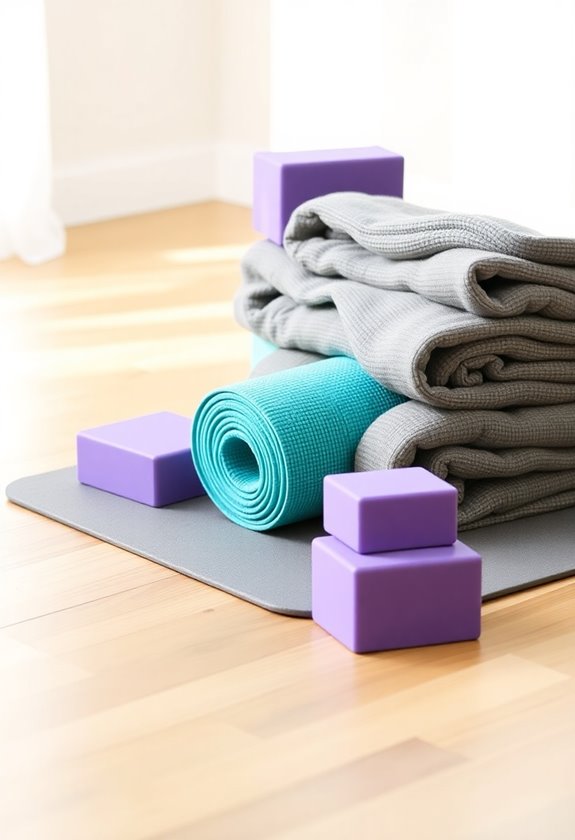
Four essential props can transform your yoga practice when you're working with limited flexibility: blocks, straps, blankets, and bolsters. You'll find these tools invaluable for maintaining proper alignment and safely deepening your stretches.
Blocks help you bridge the gap between your hands and the floor in standing poses, while straps allow you to reach further in stretches without compromising form. You don't need to purchase everything at once – blankets from home can serve multiple purposes, from elevating your hips in seated poses to cushioning your knees in tabletop position. Using props helps increase body awareness while learning new poses. When you're ready to advance your practice, bolsters provide vital support for challenging poses and restorative work. If you're missing any of these props, you can improvise with household items: books can replace blocks, scarves can work as straps, and rolled blankets make excellent bolsters. A yoga wheel can be particularly helpful for spinal flexibility when working on backbends and chest-opening poses.
Gentle Stretches for Tight Muscles
Tight muscles don't have to keep you from practicing yoga successfully. You'll find relief through gentle stretches that target specific muscle groups while allowing you to maintain control over the intensity. When you're dealing with muscular tension, start with basic poses like the Low Lunge (Anjaneyasana) to open up your quadriceps and hip flexors. Long periods of sitting can increase muscle tightness in your quadriceps, making these stretches especially important. For maximum benefit, you'll want to hold each stretch for at least 12 seconds, applying just enough pressure to feel the stretch without causing discomfort. Remember to focus on both lower body stretches, such as hamstring and calf stretches, and hip-opening poses like the Pigeon Stretch. Using anti-fatigue mats during your practice can provide extra cushioning and support for your joints while performing these poses. If you're experiencing any sharp pain during these movements, modify the pose using props like yoga blocks, and always perform these stretches after exercise or every other day for ideal muscle recovery.
Modified Standing Poses for Beginners
While standing poses form the backbone of yoga practice, they don't have to be intimidating for beginners. Start with Mountain Pose (Tadasana), where you'll stand with parallel feet and arms by your sides, focusing on distributing your weight evenly and maintaining proper posture.
When you're ready, move into Standing Forward Fold with your feet hip-width apart, bending your knees as needed to keep your spine straight. You can place blocks under your hands for support, and remember to breathe deeply for five counts. Focus on your breath will help deepen your practice and maintain steadiness in each pose. A quality yoga mat provides essential grip and cushioning for maintaining proper alignment in standing poses.
For balance work, try Tree Pose while using a wall for stability, pressing one foot against your inner thigh while keeping your pelvis facing forward. As you practice these poses regularly, you'll build strength and flexibility, and you can gradually reduce your reliance on props.
Seated Poses Anyone Can Do
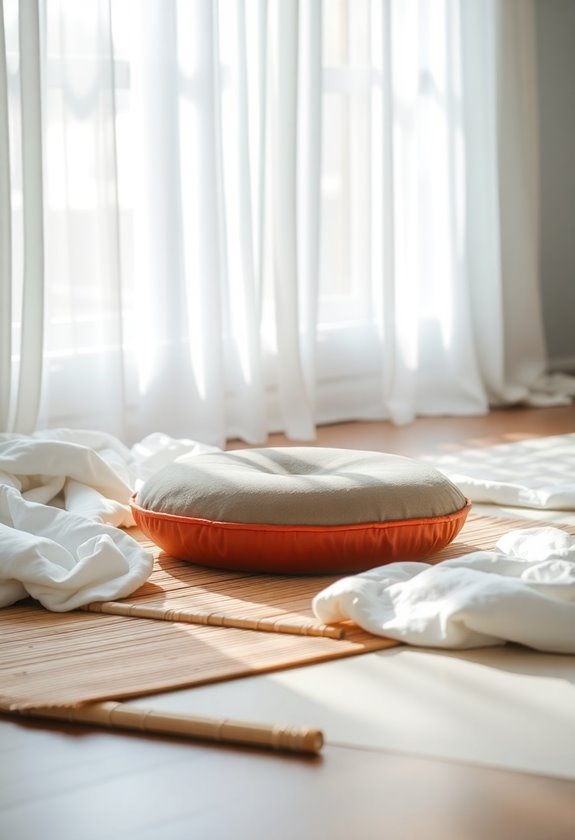
Seated poses offer a gentle introduction to yoga for those with limited flexibility. You'll find these foundational positions particularly helpful if you're just starting your yoga journey or dealing with mobility restrictions in your hips, back, or shoulders.
Start with Sukhasana (Easy Pose) by sitting cross-legged on your mat with your hands resting palms up on your knees, keeping your spine as straight as possible. Consider placing a blanket underneath you to help tilt your pelvis forward and find more comfort in the pose. When you're comfortable there, try a simple seated twist by rotating your torso to one side while maintaining your hips firmly grounded. For greater hip flexibility, practice the Eye of the Needle pose by lying on your back and crossing one ankle over the opposite thigh, holding for 30 seconds before switching sides.
Building Core Strength While Stretching
Building core strength doesn't require intense crunches or complicated equipment. You can develop a strong foundation through simple yoga poses that combine stretching with core engagement. Start with Tadasana (Mountain Pose), focusing on maintaining proper posture while engaging your deep core muscles.
Progress to Bird Dog pose, where you'll extend opposite arm and leg while keeping your core stable, then move into Forearm Plank to build strength without straining your wrists. As you become more comfortable, try incorporating dynamic movements like shifting from Downward Facing Dog to Plank, which engages your entire core system. For deeper stretches and improved alignment in these poses, consider using a quality yoga strap to help maintain proper form. You can enhance these poses by adding variations, such as lifting one foot in Plank or moving into Side Plank, always maintaining steady breathing while you strengthen and stretch simultaneously.
Daily Practice Tips for Progress
For consistent progress in your yoga journey, establishing a solid daily practice routine is essential. You’ll want to start with 5-10 minutes of dynamic warm-ups, like walking or gentle jogging, before moving into your stretches. After your warm-up, incorporate easy yoga stretches for back pain relief, such as child’s pose, cat/cow stretches, and gentle spinal twists, to help release tension and improve flexibility in your back. Remember to breathe deeply and mindfully throughout your practice, allowing your breath to guide you through each movement and stretch. Consistency is key, so aim to practice your yoga routine at the same time each day to build a sustainable and effective habit.
Choose a practice time when your body's naturally warmer, typically later in the day, and aim for 15-45 minute sessions 2-3 times weekly. Don't forget to stay hydrated, as water helps keep your joints lubricated and prevents stiffness during practice. You'll make better progress by using props like blocks and straps while modifying poses to match your current flexibility level.
Remember to focus on gentle shifts between poses, and celebrate small improvements as they come. It's perfectly fine to bend your knees or use modifications – your body will gradually adapt with consistent practice.
Frequently Asked Questions
How Long Should I Hold Each Pose to See Improvement in Flexibility?
Hold static stretches for 15-30 seconds while maintaining deep, steady breathing to encourage muscle relaxation. You'll notice improvements in flexibility within 2-3 weeks if you practice consistently. While longer holds can enhance flexibility gains, it's more important to focus on regular practice than extended durations. Combine static holds with dynamic movements, and remember to modify poses as needed for your current flexibility level.
Can I Practice Yoga if I Have Chronic Joint Pain or Arthritis?
Yes, you can safely practice yoga with arthritis or chronic joint pain when you follow proper precautions and modifications. Start with gentle yoga styles like Hatha or Restorative, and always get your doctor's approval first. You'll want to work with certified instructors who understand arthritis and can help modify poses using props like blocks and chairs. Focus on gentle movements, avoiding extreme positions that might strain your joints.
Is It Normal to Feel Muscle Soreness After Practicing Gentle Yoga?
Yes, it's perfectly normal to experience muscle soreness after gentle yoga, even when you're doing simple poses. Your body's responding to new movements and stretches, which can create tiny muscle fiber tears leading to Delayed Onset Muscle Soreness (DOMS). While the soreness might last 24-72 hours, it's typically milder than what you'd experience with intense workouts. You can manage this discomfort through proper hydration, gentle stretching, and adequate rest between sessions.
Should I Practice Yoga on an Empty Stomach or After Eating?
You'll get the best results by practicing yoga on an empty stomach, ideally waiting 4 hours after a heavy meal or 1-2 hours after a light snack. When you practice with food in your system, your body diverts energy to digestion instead of focusing on your yoga practice. An empty stomach allows for deeper stretches, better flexibility, and more effective poses while helping your body tap into stored energy reserves.
How Often Should I Take Rest Days Between Yoga Sessions?
You'll need 1-2 rest days per week when practicing yoga regularly. If you're doing gentle or restorative yoga, you can practice daily, but for more intense styles like Power or Ashtanga yoga, you should incorporate rest days between sessions. Listen to your body's signals, and if you're experiencing muscle soreness or fatigue, it's time to take a break. You can still do light stretching on rest days.


