

You'll discover safe and effective chair yoga through seven essential poses that build strength and flexibility at home. Start with seated Mountain Pose for better posture, then explore gentle Cat-Cow stretches to improve spinal mobility. Practice seated Forward Bends and Twists to enhance joint health, while Chair Warrior poses develop stability and balance. Using a sturdy, armless chair, position yourself with feet flat and hips above knees for ideal alignment. Remember to breathe mindfully, stay hydrated, and modify poses as needed – these foundational techniques will help you access chair yoga's full benefits.
Highlights
- Start with Seated Mountain Pose by sitting at the chair's front edge, feet flat, engaging core muscles for proper posture.
- Practice gentle Cat-Cow stretches while seated to improve spine flexibility and release back tension.
- Perform seated twists with hands on chair sides, rotating slowly to each side to enhance spinal mobility.
- Try Chair Warrior II by positioning one leg forward and extending arms while staying securely seated.
- Incorporate seated forward bends to stretch hamstrings and back muscles, keeping feet firmly planted on floor.
Why Chair Yoga Matters
A gentle stretch in a sturdy chair can open up a world of wellness for seniors. When you're looking to maintain independence and improve your health, chair yoga offers a safe and effective way to enhance both your physical and mental well-being. Studies show that practicing for 45 minutes twice weekly can provide lasting pain relief for those with osteoarthritis.
You'll discover that chair yoga helps strengthen your core and leg muscles, which greatly reduces your risk of falls while improving your daily balance. Through regular practice, you're supporting your body's need for flexibility and building functional strength that makes everyday tasks easier to manage. What's more, chair yoga helps soothe your mind and lift your spirits, contributing to better sleep and reduced anxiety. The practice also provides an excellent opportunity to manage age-related conditions like arthritis while improving circulation and maintaining your independence at home.
Getting Ready for Practice
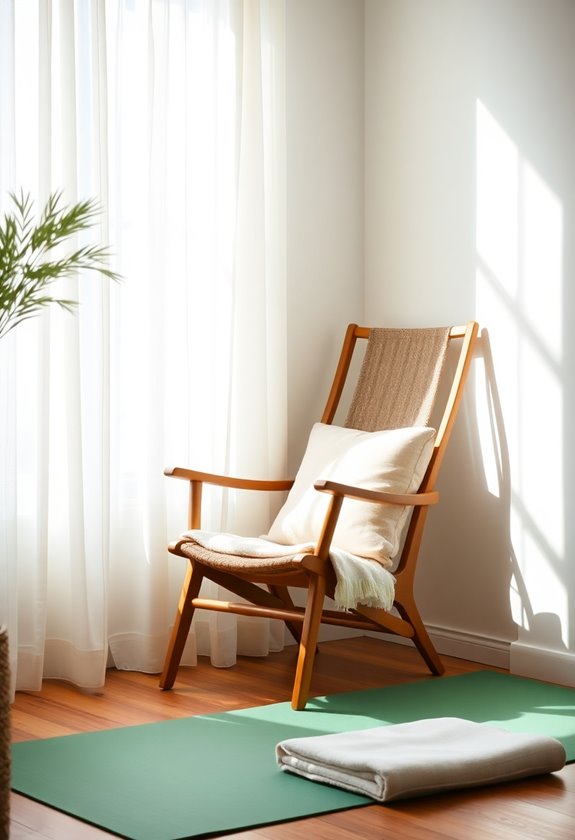
Setting yourself up properly for chair yoga can make all the difference in your practice. You'll need a sturdy chair that positions your hips slightly higher than your knees, and you should place both feet flat on the floor for even weight distribution. For extra stability, you can position the chair against a wall on a non-slip surface like a yoga mat. Creating a calm, clutter-free practice environment will help enhance your mental well-being and focus.
Don’t forget to gather your essential props before starting: yoga blocks for modifications, straps to help with alignment, and blankets for cushioning and comfort. Having high-density foam blocks provides the most stable support for gentle poses. You’ll also want to plan your sequence thoughtfully, starting with gentle warm-ups and progressing to balanced poses that work different areas of your body. Remember, you shouldn’t push beyond your comfort zone, and it’s perfectly fine to modify poses as needed. Additionally, having the best yoga mats for your practice is crucial for a comfortable and stable foundation. Look for a mat with good grip to prevent slipping, and enough cushioning to support your joints during poses. Investing in a quality mat can enhance your overall experience and help you focus on your practice without distractions. Don’t forget to check out customer reviews and ratings to find the best yoga mats for your needs.
Mountain Pose Fundamentals
Mountain Pose serves as the cornerstone of your yoga practice, whether you're doing it seated or standing. In the seated variation, you'll want to position yourself at the front of your chair with your feet flat on the ground and knees bent at 90 degrees.
To achieve proper alignment, roll your shoulders down while engaging your abdominal muscles, and keep your spine straight. Regular practice can help relieve back pain and promote better posture. You'll maintain a small space between your knees while letting your arms rest naturally at your sides. If you need extra support, don't hesitate to place blocks under your feet or use a cushion behind your back. Using an adjustable footrest can help maintain proper leg positioning and enhance overall comfort during seated poses.
Practice this pose for 3-5 breaths, focusing on your posture and breathing. You'll find it's an excellent way to improve your balance and counter the effects of prolonged sitting.
Gentle Forward Bend
The Gentle Forward Bend provides a natural progression from Mountain Pose, helping you release tension in your back and shoulders while improving flexibility. Start by sitting at the edge of your chair with your feet planted hip-width apart, ensuring they're flat on the floor for proper alignment.
To begin the pose, take a deep breath while raising your arms overhead, then slowly exhale as you fold forward with your arms extending toward the floor. You'll want to maintain a straight back throughout the movement, bending only as far as feels comfortable for your body. This pose is particularly effective for improving joint health, especially in those with arthritis symptoms. If you need additional support, don't hesitate to hold the chair's sides or use yoga blocks. Remember to keep your breathing slow and steady, holding the position for several seconds before gently returning to an upright position.
Side Stretches and Twists
After mastering the Forward Bend, you'll find Side Stretches and Twists offer new ways to increase flexibility and promote healthy movement. To begin, sit towards the front of your chair with both feet flat on the floor and your arms resting in your lap.
Here's how to perform the stretch:
- Hold the left side of your chair with your left hand
- Raise your right arm toward the ceiling while inhaling
- Gently lean to the left as you exhale, looking up
- Hold for three complete breath cycles
- Switch sides and repeat
You'll notice these stretches help relieve back tension while improving your posture and breathing capacity. These movements are particularly beneficial because they strengthen spinal muscles and support overall back health. Remember to move slowly and listen to your body, adjusting the depth of each stretch to match your comfort level and flexibility.
Building Balance With Warriors
Building strength and stability becomes increasingly essential as we age, which is why warrior poses serve as excellent balance-training exercises for seniors. You'll find these poses particularly effective when practiced with the support of a chair, making them both safe and accessible.
To begin, sit tall at the edge of your chair with both feet firmly planted on the floor. Next, step one foot out to the side while keeping your knee aligned with your toes, then raise your arms parallel to the floor as you inhale. As you hold this position, rotate your upper body and head to one side, maintaining length in your spine for several breaths. You'll want to practice these movements on both sides, allowing your body to build strength and coordination gradually.
For enhanced stability and deeper stretches in warrior poses, consider using a yoga wheel prop to support your balance and alignment.
Safe Practice Tips
While warrior poses offer valuable balance training, practicing yoga safely is paramount for seniors beginning their journey. You'll need to consult with your healthcare provider before starting, and it's crucial to find a qualified instructor who understands senior-specific modifications.
Consider using anti-fatigue mats beneath your chair for added comfort and joint protection during extended practice sessions.
Before each session:
- Choose a sturdy, armless chair that won't wobble during practice
- Clear your space of any potential hazards or obstacles
- Wear comfortable clothing that allows free movement
- Keep water nearby for proper hydration
- Have props like blocks or straps within reach
Remember to start slowly and listen to your body's signals. You shouldn't feel pain during practice, and it's perfectly fine to modify poses using props or taking breaks when needed. Aim for 2-3 practice sessions weekly to build strength and flexibility safely.
Frequently Asked Questions
Can I Practice Chair Yoga if I Have Arthritis?
Yes, you can safely practice chair yoga if you have arthritis, as it's specifically designed for people with joint limitations and mobility issues. You'll want to start slowly and consult your doctor before beginning any new exercise program. Chair yoga has been clinically proven to reduce arthritis pain, improve flexibility, and enhance physical function, while the chair provides stability and support during practice.
How Long Should Each Chair Yoga Session Last for Beginners?
Studies show that 80% of senior beginners find success with shorter yoga sessions that gradually build stamina. You'll want to start with 10-15 minute sessions, which gives your body time to adjust to the new movements without overexertion. As you build strength and flexibility over several weeks, you can slowly extend your practice to 20-25 minutes, always listening to your body's signals and taking breaks when needed.
What Time of Day Is Best for Practicing Chair Yoga?
You can practice chair yoga at any time that works best for your schedule, but each time of day offers unique benefits. Morning sessions can energize you for the day ahead and reduce stiffness, while afternoon practice helps combat midday fatigue and boost productivity. If you're looking to wind down, evening sessions can promote relaxation and better sleep quality, as long as you stick to gentle poses.
Should I Wear Special Clothing or Footwear for Chair Yoga?
You don't need to raid a specialty yoga store to get started – your everyday comfortable clothes will work perfectly fine! Choose snug-fitting, breathable tops that won't hang loose during movements, and pair them with comfortable pants or shorts that allow free movement. While you don't need special footwear, stick to flat, non-slip shoes if you're wearing any, though practicing in regular comfortable shoes is perfectly acceptable.
Can Chair Yoga Help With Sleeping Problems or Insomnia?
Yes, chair yoga can greatly help with your sleep issues and insomnia. It works by triggering your body's natural relaxation response through gentle movements and deep breathing. You'll find that regular practice reduces stress and anxiety, which are common sleep disruptors. The low-impact nature of chair yoga helps release muscle tension and calm your mind, making it easier to fall asleep and maintain better sleep quality.


