You can fix your night shift sleep by following these proven strategies. Start by maintaining a consistent sleep schedule, even on days off, and create a pitch-black bedroom using blackout curtains or aluminum foil on windows. Keep your room cool between 60-65°F, and manage light exposure by wearing sunglasses on your commute home. Power down electronics before bed, establish a calming bedtime routine, and exercise at least 3 hours before sleep. Be strategic with meals, limiting caffeine as your shift ends, and communicate your sleep needs to family and friends. These foundational steps will guide you toward better sleep habits.
Highlights
- Keep a consistent sleep schedule by sleeping immediately after your shift and maintaining similar times on off days.
- Create a completely dark bedroom using blackout curtains, and maintain cool temperatures between 60-65°F for optimal sleep.
- Wear sunglasses when heading home and dim lights before bedtime to regulate your body’s natural melatonin production.
- Eat your main meal before shifts, pack light snacks, and avoid caffeine near shift’s end to prevent sleep disruption.
- Exercise at least 3 hours before sleep and use breaks for short walks to maintain physical activity without disrupting rest.
Establish Your Sleep Schedule

For night shift workers, maintaining a consistent sleep schedule is essential – even on your days off. You’ll want to aim for at least seven continuous hours of sleep, though you can split it into two blocks if needed, with your main sleep period occurring at the same time each day.
- Plan to sleep immediately after your shift ends to maintain regularity
- Keep your bedroom dark, quiet, and cool during daytime sleep
- Don’t change your sleep schedule on off days
- Start adjusting your sleep times gradually before shift changes
Your body clock relies on consistency to function properly, and changing your sleep pattern frequently can lead to disrupted sleep quality and fatigue. Consider using white noise machines to block out daytime sounds that could disturb your rest. Sleep supplements can help regulate your natural sleep-wake cycle when working nights. When you stick to a regular schedule, you’ll find it easier to fall asleep and stay asleep during daylight hours. In addition to using white noise machines and sleep supplements, there are other tips to improve sleep habits while working night shifts. Creating a relaxing bedtime routine and making your sleep environment as dark and comfortable as possible can also assist in getting quality rest during the day. It’s also important to limit caffeine and alcohol intake before bedtime and to avoid heavy meals that could disrupt your sleep. By following these tips, you can help your body adjust to working nights and improve your overall sleep quality.
Block Out All Light
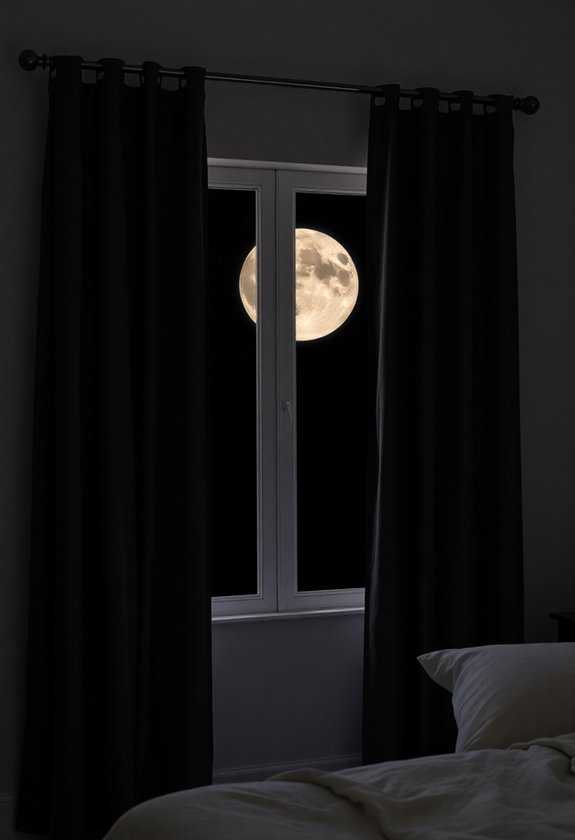
With your sleep schedule in place, managing light exposure becomes your next major focus. Light considerably impacts your circadian rhythms, and even small amounts can disrupt your sleep quality during the day.
Start by addressing electronic devices in your bedroom – cover LED lights on chargers and electronics with tape, and turn off unnecessary devices completely. Studies show complete darkness promotes melatonin production for better sleep. Quality thermal curtain materials help regulate room temperature while blocking light. You’ll want to install blackout curtains if possible, but if that’s not an option, you can use aluminum foil on your windows (apply it with water or shampoo for better adhesion). Don’t forget to block light coming from under your door with a towel. When you’re preparing for sleep, use blue light blocking glasses and enable night mode settings on your devices if you must use them, though it’s best to avoid screens entirely before bedtime.
Control Your Room Temperature
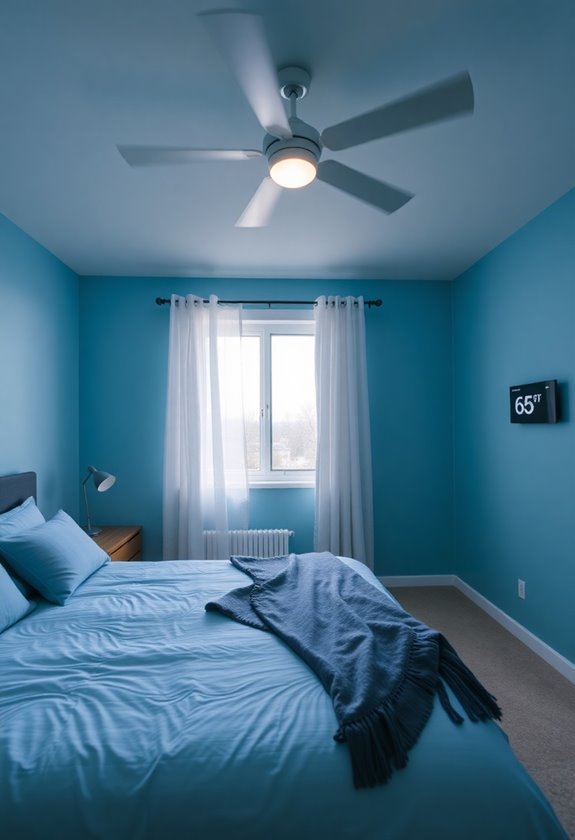
Temperature control plays an essential role in achieving quality daytime sleep as a night shift worker. You’ll want to keep your bedroom between 60°F to 65°F (15.6°C to 18.3°C), as this range promotes better sleep quality and helps maintain proper sleep cycles. Core body temperature naturally drops about two hours before sleep onset.
To optimize your sleep environment:
- Install blackout curtains that also provide insulation
- Use cooling bedding materials during warmer months
- Consider a programmable thermostat to maintain consistent temperatures
- Monitor humidity levels, as high humidity can disrupt deep sleep
Remember that your body naturally drops in temperature before sleep, so it’s important to create the right conditions. While under your bedding, aim for a temperature between 80.6°F and 89.6°F, and adjust your blankets and clothing layers accordingly to maintain comfort throughout your rest period.
Manage Light During Work

Managing light exposure during your night shift is essential for maintaining alertness and regulating your body’s circadian rhythm. During your shift, you’ll want to keep your workspace brightly lit with overhead lights or a desk lamp to stay alert and maintain good performance. The right sleep mask fit can make a significant difference in blocking unwanted light during daytime rest periods.
After your shift ends, it’s vital to shift into sleep mode by reducing your light exposure. Blue light from devices can seriously disrupt your sleep quality, so avoid screens in the hours before bedtime. Wear sunglasses on your way home, and keep your pre-sleep environment dimly lit to help your body produce melatonin. When you’re ready to sleep, make sure your bedroom is completely dark using blackout curtains or a sleep mask to block out daylight. When it’s time to wake up, use a gradual wake-up light that simulates sunrise, which will help minimize sleep inertia and ease you into your next shift. To further prepare your body for sleep, consider doing some natural eye exercises to relax your eyes and reduce any strain from screen use during your shift. Gentle eye rolling and focusing on distant objects can help to relieve tension and signal to your body that it’s time to wind down. By incorporating these practices into your post-shift routine, you can help ensure a more restful and rejuvenating sleep before your next shift.
Power Down Electronic Devices
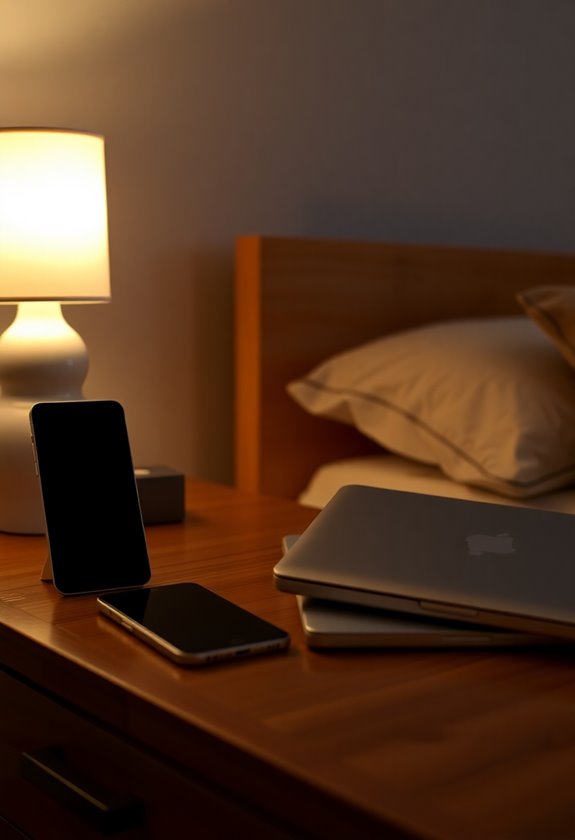
Electronic devices pose a significant challenge for night shift workers trying to get quality sleep during daylight hours. You’ll need to be especially mindful of how your devices affect your sleep quality, as their blue light can disrupt your body’s natural melatonin production and circadian rhythm.
Storing your devices in a separate charging area outside your bedroom helps eliminate the temptation to check them during sleep hours.
To improve your sleep, you should power down all electronic devices at least an hour before your bedtime. If you must use devices, activate blue light filters or night mode, and keep screen brightness dim. Don’t rely on your phone as an alarm clock; instead, use a basic alarm clock to avoid the temptation of checking notifications. Create a device-free bedroom environment by removing TVs and other electronics, and use a white noise machine rather than your phone for ambient sound. Remember to silence all notifications during your designated sleep hours.
Follow Smart Eating Habits

Beyond managing your device usage, proper eating habits play a major role in the quality of your night shift sleep. You’ll want to focus on eating your main meal before your shift starts, then stick to lighter, nutrient-dense snacks throughout your work hours. Choose foods that are easy to digest, like whole grains, lean proteins, and fresh produce, while avoiding heavy, processed options that can leave you feeling sluggish.
- Time your meals strategically, eating smaller portions as your shift progresses
- Select complex carbohydrates and lean proteins for sustained energy
- Pack nutrient-rich snacks like nuts, fruits, and vegetables
- Stay hydrated but limit caffeine intake, especially near shift’s end
- Don’t eat large meals within 2-3 hours of your planned sleep time
Create A Relaxing Bedtime Routine

For night shift workers, establishing a relaxing bedtime routine is essential for quality sleep. Start by creating a calm environment in your bedroom with blackout curtains, a comfortable temperature between 65-70°F, and soothing white noise to block out daytime sounds.
Begin winding down an hour before your intended sleep time by taking a warm bath or practicing gentle stretches to release physical tension. You’ll want to avoid bright lights and electronic devices, which can disrupt your body’s natural sleep signals. Instead, try calming activities like reading a physical book, journaling to clear your mind, or practicing deep breathing exercises. Using aromatherapy with lavender scents and playing soft, relaxing music can further enhance your wind-down routine while signaling to your body that it’s time to rest. Consider lighting aromatherapy candles in your bedroom to create a peaceful ambiance that promotes better sleep quality.
Exercise At The Right Time

While establishing a solid bedtime routine helps you sleep better, timing your exercise properly can greatly impact your night shift schedule. You’ll want to exercise before your shift starts to boost your energy and maintain alertness throughout your working hours.
- Plan your workouts at least 3 hours before you need to sleep to avoid disrupting your rest.
- Consider incorporating 20-30 minute walks during your work breaks to stay active.
- If you can’t exercise before work, opt for lighter activities like stretching or yoga after your shift.
- Try to maintain consistent workout times when you cluster your night shifts together.
- Choose high-intensity or strength training exercises when you’re short on time, but guarantee they’re completed well before bedtime.
Optimize Your Sleep Environment
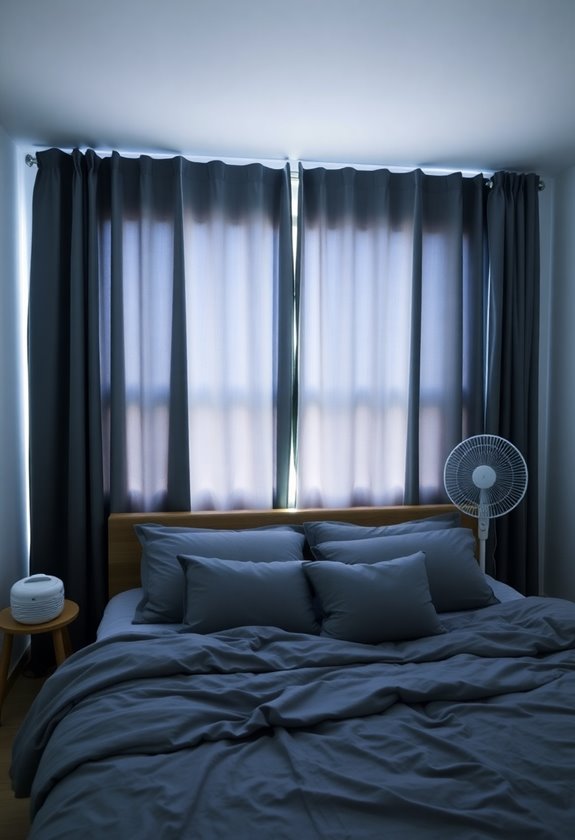
Creating an ideal sleep environment is essential for night shift workers who need quality rest during daylight hours. You’ll need to focus on controlling light, sound, and temperature in your bedroom to maximize sleep quality during the day.
Start by installing blackout curtains or adding light-blocking drapery lining to existing window treatments, which will prevent sunlight from disrupting your sleep cycle. Keep your bedroom cool and quiet by using earplugs or a white noise machine to block out daytime sounds. You should remove all electronic devices from your bedroom or turn them off completely to minimize light and noise disturbances. Make sure you’ve got a clear path to the bathroom and install dim red nightlights for safe navigation without disrupting your body’s natural sleep signals. Consider using cooling bed sheets to regulate your body temperature and prevent overheating during sleep.
Get Family And Friends Onboard

A strong support system at home plays a key role in successful night shift sleep adaptation. Start by having an open conversation with your family and friends about your specific sleep schedule and why it’s essential for your health and job performance. Make sure to clearly communicate your sleep times and establish firm boundaries around when you shouldn’t be disturbed.
- Ask them to help maintain a quiet environment during your sleep hours
- Schedule family activities and social events around your sleep periods
- Request their assistance with household tasks when needed
- Plan regular family meetings to discuss sleep-related challenges
- Keep them updated on your schedule changes and adjustment progress
Remember to be flexible with social connections by utilizing online meetings or alternative timing, while consistently prioritizing your sleep needs.
Frequently Asked Questions
How Long Does It Take for the Body to Adjust to Night Shift?
While you might wish for a magic wand to speed up shift adjustment, there’s no fixed timeline for your body to adapt to night work. You’ll find the process highly individual, with some people adjusting within a few weeks, while others may take months or never fully adapt. Scientific research shows that even long-term night workers continue experiencing circadian rhythm disruptions, affecting their sleep quality and overall health.
Can Melatonin Supplements Help With Night Shift Sleep Adjustment?
Yes, melatonin supplements can help you adjust to night shift sleep patterns when used correctly. You’ll want to take 1-5 milligrams about 30 minutes before your planned sleep time, even if it’s during daylight hours. While melatonin won’t necessarily make you more alert during your shift, it can help regulate your sleep cycle when combined with other strategies like light therapy. Always consult your doctor before starting melatonin, as individual responses vary.
Are Weekend Naps Harmful When Working Night Shifts During Weekdays?
Like a delicate balancing act on a tightrope, weekend naps can be tricky for night shift workers. You’ll want to be cautious with weekend napping since it can disrupt your carefully established sleep-wake cycle for night shifts. If you must nap, keep it under 45 minutes to avoid sleep inertia and potential disruption to your circadian rhythm. You’re better off maintaining your regular night shift sleep schedule, even on weekends, to support your body’s adaptation.
Which Sleep Disorders Are Most Common Among Night Shift Workers?
You’ll commonly encounter three main sleep disorders while working night shifts. Shift Work Sleep Disorder (SWSD) affects up to 40% of shift workers, causing insomnia and excessive daytime sleepiness. Circadian rhythm misalignment disrupts your body’s natural sleep-wake cycle, making it difficult to maintain consistent rest patterns. Additionally, chronic insomnia frequently develops among night shift workers, leading to significant sleep loss and increased health risks.
Does Working Night Shifts Permanently Affect Long-Term Health?
Yes, night shift work can permanently impact your long-term health, even after you’ve stopped working nights. You’ll face increased risks of cardiovascular disease, with a 40% higher chance of heart problems. Your risk of diabetes jumps by 50%, and you’re three times more likely to develop metabolic syndrome compared to day workers. Studies show these health effects can persist, particularly if you’ve worked night shifts for more than 10-15 years.disrupted sleep quality and fatigue. Consider using white noise machines to block out daytime sounds that could disturb your rest. Sleep supplements can help regulate your natural sleep-wake cycle when working nights. When you stick to a regular schedule, you’ll find it easier to fall asleep and stay asleep during daylight hours.thout disrupting rest.
Establish Your Sleep Schedule
For night shift workers, maintaining a consistent sleep schedule is essential – even on your days off. You’ll want to aim for at least seven continuous hours of sleep, though you can split it into two blocks if needed, with your main sleep period occurring at the same time each day.
- Plan to sleep immediately after your shift ends to maintain regularity
- Keep your bedroom dark, quiet, and cool during daytime sleep
- Don’t change your sleep schedule on off days
- Start adjusting your sleep times gradually before shift changes
Your body clock relies on consistency to function properly, and changing your sleep pattern frequently can lead to disrupted sleep quality and fatigue. Consider using white noise machines to block out daytime sounds that could disturb your rest. Sleep supplements can help regulate your natural sleep-wake cycle when working nights. When you stick to a regular schedule, you’ll find it easier to fall asleep and stay asleep during daylight hours. In addition to using white noise machines and sleep supplements, there are other tips to improve sleep habits while working night shifts. Creating a relaxing bedtime routine and making your sleep environment as dark and comfortable as possible can also assist in getting quality rest during the day. It’s also important to limit caffeine and alcohol intake before bedtime and to avoid heavy meals that could disrupt your sleep. By following these tips, you can help your body adjust to working nights and improve your overall sleep quality.
Block Out All Light
With your sleep schedule in place, managing light exposure becomes your next major focus. Light considerably impacts your circadian rhythms, and even small amounts can disrupt your sleep quality during the day.
Start by addressing electronic devices in your bedroom – cover LED lights on chargers and electronics with tape, and turn off unnecessary devices completely. Studies show complete darkness promotes melatonin production for better sleep. Quality thermal curtain materials help regulate room temperature while blocking light. You’ll want to install blackout curtains if possible, but if that’s not an option, you can use aluminum foil on your windows (apply it with water or shampoo for better adhesion). Don’t forget to block light coming from under your door with a towel. When you’re preparing for sleep, use blue light blocking glasses and enable night mode settings on your devices if you must use them, though it’s best to avoid screens entirely before bedtime.
Control Your Room Temperature
Temperature control plays an essential role in achieving quality daytime sleep as a night shift worker. You’ll want to keep your bedroom between 60°F to 65°F (15.6°C to 18.3°C), as this range promotes better sleep quality and helps maintain proper sleep cycles. Core body temperature naturally drops about two hours before sleep onset.
To optimize your sleep environment:
- Install blackout curtains that also provide insulation
- Use cooling bedding materials during warmer months
- Consider a programmable thermostat to maintain consistent temperatures
- Monitor humidity levels, as high humidity can disrupt deep sleep
Remember that your body naturally drops in temperature before sleep, so it’s important to create the right conditions. While under your bedding, aim for a temperature between 80.6°F and 89.6°F, and adjust your blankets and clothing layers accordingly to maintain comfort throughout your rest period.
Manage Light During Work
Managing light exposure during your night shift is essential for maintaining alertness and regulating your body’s circadian rhythm. During your shift, you’ll want to keep your workspace brightly lit with overhead lights or a desk lamp to stay alert and maintain good performance. The right sleep mask fit can make a significant difference in blocking unwanted light during daytime rest periods.
After your shift ends, it’s vital to shift into sleep mode by reducing your light exposure. Blue light from devices can seriously disrupt your sleep quality, so avoid screens in the hours before bedtime. Wear sunglasses on your way home, and keep your pre-sleep environment dimly lit to help your body produce melatonin. When you’re ready to sleep, make sure your bedroom is completely dark using blackout curtains or a sleep mask to block out daylight. When it’s time to wake up, use a gradual wake-up light that simulates sunrise, which will help minimize sleep inertia and ease you into your next shift.
Power Down Electronic Devices
Electronic devices pose a significant challenge for night shift workers trying to get quality sleep during daylight hours. You’ll need to be especially mindful of how your devices affect your sleep quality, as their blue light can disrupt your body’s natural melatonin production and circadian rhythm.
Storing your devices in a separate charging area outside your bedroom helps eliminate the temptation to check them during sleep hours.
To improve your sleep, you should power down all electronic devices at least an hour before your bedtime. If you must use devices, activate blue light filters or night mode, and keep screen brightness dim. Don’t rely on your phone as an alarm clock; instead, use a basic alarm clock to avoid the temptation of checking notifications. Create a device-free bedroom environment by removing TVs and other electronics, and use a white noise machine rather than your phone for ambient sound. Remember to silence all notifications during your designated sleep hours.
Follow Smart Eating Habits
Beyond managing your device usage, proper eating habits play a major role in the quality of your night shift sleep. You’ll want to focus on eating your main meal before your shift starts, then stick to lighter, nutrient-dense snacks throughout your work hours. Choose foods that are easy to digest, like whole grains, lean proteins, and fresh produce, while avoiding heavy, processed options that can leave you feeling sluggish.
- Time your meals strategically, eating smaller portions as your shift progresses
- Select complex carbohydrates and lean proteins for sustained energy
- Pack nutrient-rich snacks like nuts, fruits, and vegetables
- Stay hydrated but limit caffeine intake, especially near shift’s end
- Don’t eat large meals within 2-3 hours of your planned sleep time
Create A Relaxing Bedtime Routine
For night shift workers, establishing a relaxing bedtime routine is essential for quality sleep. Start by creating a calm environment in your bedroom with blackout curtains, a comfortable temperature between 65-70°F, and soothing white noise to block out daytime sounds.
Begin winding down an hour before your intended sleep time by taking a warm bath or practicing gentle stretches to release physical tension. You’ll want to avoid bright lights and electronic devices, which can disrupt your body’s natural sleep signals. Instead, try calming activities like reading a physical book, journaling to clear your mind, or practicing deep breathing exercises. Using aromatherapy with lavender scents and playing soft, relaxing music can further enhance your wind-down routine while signaling to your body that it’s time to rest. Consider lighting aromatherapy candles in your bedroom to create a peaceful ambiance that promotes better sleep quality.
Exercise At The Right Time
While establishing a solid bedtime routine helps you sleep better, timing your exercise properly can greatly impact your night shift schedule. You’ll want to exercise before your shift starts to boost your energy and maintain alertness throughout your working hours.
- Plan your workouts at least 3 hours before you need to sleep to avoid disrupting your rest.
- Consider incorporating 20-30 minute walks during your work breaks to stay active.
- If you can’t exercise before work, opt for lighter activities like stretching or yoga after your shift.
- Try to maintain consistent workout times when you cluster your night shifts together.
- Choose high-intensity or strength training exercises when you’re short on time, but guarantee they’re completed well before bedtime.
Optimize Your Sleep Environment
Creating an ideal sleep environment is essential for night shift workers who need quality rest during daylight hours. You’ll need to focus on controlling light, sound, and temperature in your bedroom to maximize sleep quality during the day.
Start by installing blackout curtains or adding light-blocking drapery lining to existing window treatments, which will prevent sunlight from disrupting your sleep cycle. Keep your bedroom cool and quiet by using earplugs or a white noise machine to block out daytime sounds. You should remove all electronic devices from your bedroom or turn them off completely to minimize light and noise disturbances. Make sure you’ve got a clear path to the bathroom and install dim red nightlights for safe navigation without disrupting your body’s natural sleep signals. Consider using cooling bed sheets to regulate your body temperature and prevent overheating during sleep.
Get Family And Friends Onboard
A strong support system at home plays a key role in successful night shift sleep adaptation. Start by having an open conversation with your family and friends about your specific sleep schedule and why it’s essential for your health and job performance. Make sure to clearly communicate your sleep times and establish firm boundaries around when you shouldn’t be disturbed.
- Ask them to help maintain a quiet environment during your sleep hours
- Schedule family activities and social events around your sleep periods
- Request their assistance with household tasks when needed
- Plan regular family meetings to discuss sleep-related challenges
- Keep them updated on your schedule changes and adjustment progress
Remember to be flexible with social connections by utilizing online meetings or alternative timing, while consistently prioritizing your sleep needs.
Frequently Asked Questions
How Long Does It Take for the Body to Adjust to Night Shift?
While you might wish for a magic wand to speed up shift adjustment, there’s no fixed timeline for your body to adapt to night work. You’ll find the process highly individual, with some people adjusting within a few weeks, while others may take months or never fully adapt. Scientific research shows that even long-term night workers continue experiencing circadian rhythm disruptions, affecting their sleep quality and overall health.
Can Melatonin Supplements Help With Night Shift Sleep Adjustment?
Yes, melatonin supplements can help you adjust to night shift sleep patterns when used correctly. You’ll want to take 1-5 milligrams about 30 minutes before your planned sleep time, even if it’s during daylight hours. While melatonin won’t necessarily make you more alert during your shift, it can help regulate your sleep cycle when combined with other strategies like light therapy. Always consult your doctor before starting melatonin, as individual responses vary.
Are Weekend Naps Harmful When Working Night Shifts During Weekdays?
Like a delicate balancing act on a tightrope, weekend naps can be tricky for night shift workers. You’ll want to be cautious with weekend napping since it can disrupt your carefully established sleep-wake cycle for night shifts. If you must nap, keep it under 45 minutes to avoid sleep inertia and potential disruption to your circadian rhythm. You’re better off maintaining your regular night shift sleep schedule, even on weekends, to support your body’s adaptation.
Which Sleep Disorders Are Most Common Among Night Shift Workers?
You’ll commonly encounter three main sleep disorders while working night shifts. Shift Work Sleep Disorder (SWSD) affects up to 40% of shift workers, causing insomnia and excessive daytime sleepiness. Circadian rhythm misalignment disrupts your body’s natural sleep-wake cycle, making it difficult to maintain consistent rest patterns. Additionally, chronic insomnia frequently develops among night shift workers, leading to significant sleep loss and increased health risks.
Does Working Night Shifts Permanently Affect Long-Term Health?
Yes, night shift work can permanently impact your long-term health, even after you’ve stopped working nights. You’ll face increased risks of cardiovascular disease, with a 40% higher chance of heart problems. Your risk of diabetes jumps by 50%, and you’re three times more likely to develop metabolic syndrome compared to day workers. Studies show these health effects can persist, particularly if you’ve worked night shifts for more than 10-15 years.