
Breaking the habit of sleeping late requires strategic lifestyle adjustments that target your body’s natural sleep-wake cycle. You’ll need to establish a calming wind-down routine 20 minutes before bed, limit blue light exposure in the evening, and exercise earlier in the day to promote better sleep quality. Set strict boundaries with electronic devices, maintain a cool and dark bedroom environment, and avoid caffeine after 2 p.m. Gradually shift your bedtime earlier in 15-minute increments while keeping a consistent wake time, and get natural sunlight exposure within an hour of waking. These evidence-based approaches will help you develop lasting changes to your sleep patterns.
Highlights
- Set a consistent wake-up time every day and stick to it, even on weekends, to regulate your body’s internal clock.
- Create a relaxing bedtime routine with activities like reading or stretching 20 minutes before your target sleep time.
- Avoid screens, caffeine, and intense exercise in the evening hours as they can interfere with natural sleep patterns.
- Gradually adjust your bedtime by 15-30 minute increments until you reach your desired sleep schedule.
- Maximize morning sunlight exposure and maintain a dark bedroom environment to help regulate your circadian rhythm naturally.
Create Your Evening Wind-Down Routine

Your evening wind-down routine serves as a critical bridge between daytime chaos and nighttime rest. To create an effective routine, start by choosing relaxing activities that’ll signal your body it’s time to wind down, such as gentle stretching, reading a book, or taking a warm bath about 20 minutes before bed.
Consistency is key, so maintain a regular schedule and avoid stimulating activities like social media scrolling or late-night TV watching. Do not disturb mode on your devices can help establish firm boundaries between work and rest. Lighting aromatherapy candles can create a soothing atmosphere that promotes relaxation and better sleep quality. Instead, try writing in a gratitude journal or creating tomorrow’s to-do list to clear your mind of worries. Remember to keep your bed reserved for sleep and intimacy only, which helps strengthen your brain’s association between your bedroom and rest. Include calming elements like herbal tea or light yoga, as these activities can lower cortisol levels and promote melatonin production.
Manage Light Exposure Throughout Day

While establishing a calming evening routine sets the stage for better sleep, managing your light exposure throughout the day plays an equally important role in regulating your sleep-wake cycle. The pineal gland releases melatonin when darkness falls, helping prepare your body for sleep. You’ll need to be strategic about three key periods:
- Start your morning by getting natural sunlight within the first hour after waking, as it’s ten times more effective than indoor lighting at synchronizing your body clock.
- During daytime hours, maximize your exposure to natural light to keep your circadian rhythm strong and maintain alertness throughout the day.
- In the evening, protect your sleep by limiting exposure to artificial light, especially from screens, and consider using blue light blocking glasses two hours before bedtime.
Remember to create a completely dark sleep environment using blackout curtains or blinds to support quality rest.
Exercise Early for Better Sleep

Exercising early in the morning can transform your sleep quality and set you up for deeper, more restorative rest. When you work out in the morning, you’ll experience a greater decrease in nighttime blood pressure and spend 75% more time in restorative sleep stages compared to exercising later in the day. According to research, doing workouts at least 3-4 hours before bed ensures optimal sleep quality. Taking natural sleep supplements can further enhance the sleep-promoting benefits of your morning exercise routine.
Here’s why morning exercise works so well:
- It helps establish a consistent sleep-wake routine that regulates your body’s natural rhythm
- You’ll get natural, sustained energy throughout the day without caffeine crashes
- Your core body temperature rises and falls at the ideal times, supporting your sleep cycle
- The endorphins released during exercise will have worn off by bedtime, preventing sleep interference
- You’ll naturally increase your slow-wave sleep, which is essential for complete rejuvenation
Set Strict Electronic Device Boundaries
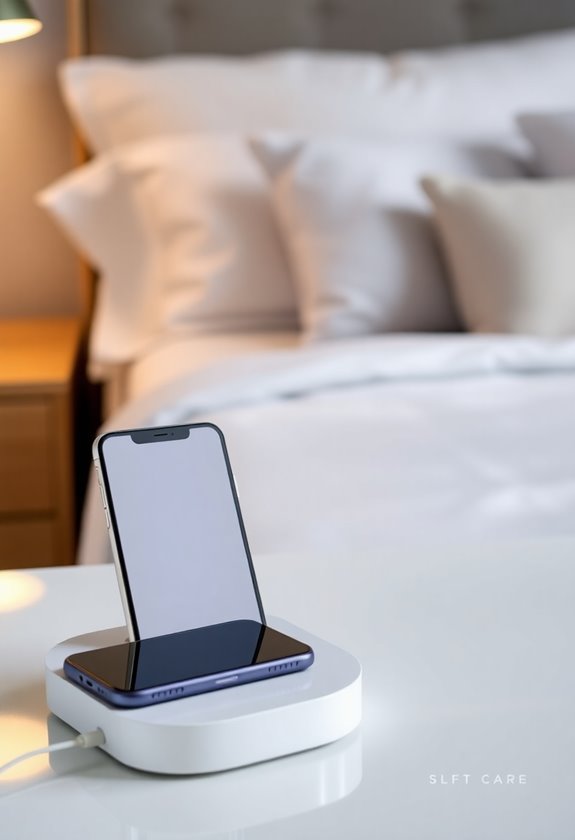
Building on the benefits of morning exercise, managing electronic devices plays a notable role in achieving quality sleep. You’ll need to establish strict boundaries by keeping all screens out of your bedroom and stopping device use at least one hour before bedtime. The average person spends over seven hours daily staring at screens, making it crucial to set boundaries.
To protect your natural sleep cycle, you should:
- Enable blue light filters on your devices during evening hours
- Create a designated device-free zone in your bedroom
- Set specific cut-off times for screen use
- Replace late-night scrolling with relaxing activities like reading
The blue light from your screens can notably disrupt melatonin production, making it harder for you to fall asleep naturally. You’ll find it easier to drift off when you’ve established a consistent device-free evening routine that signals to your body it’s time to rest.
Adjust Your Sleep Environment

Your sleep environment serves as the foundation for quality rest and can greatly impact your ability to fall asleep earlier. To optimize your bedroom, start by controlling the light exposure through blackout curtains and reducing blue light from electronic devices at least an hour before bed. Installing stylish window treatments can enhance both the functionality and aesthetics of your sleep space. You’ll want to maintain a cool temperature between 60-67°F throughout the night, as this range promotes better sleep quality. Keep your bedroom free of clutter to create a more calming atmosphere that promotes restfulness.
Address noise disruptions by using white noise machines or earplugs, and position your bed away from noisy areas. Don’t overlook the importance of comfort – invest in a supportive mattress, quality bedding, and pillows that properly support your neck. Remember to use your bed exclusively for sleep and intimacy to strengthen the mental connection between your bedroom and rest.
Time Your Meals Properly

Beyond creating the perfect sleep environment, what you eat and when you eat it can greatly influence your ability to fall asleep earlier. Research shows that maintaining consistent meal times helps regulate your body’s natural sleep-wake cycle, while eating late can disrupt your sleep quality and make it harder to wake up early.
- Schedule your last meal at least 2-3 hours before bedtime to allow proper digestion and prevent sleep disturbances
- Choose sleep-promoting foods like kiwi, cherries, nuts, and fatty fish for your evening meal
- Avoid caffeine and alcohol in the evening hours, as they can interfere with your sleep patterns
- Aim to eat your meals at the same time each day to help synchronize your body’s internal clock and improve sleep quality
Consider following a Mediterranean-style diet rich in vegetables and fruits, which has been linked to better sleep outcomes through research-backed studies.
Build A Regular Sleep Schedule

Through consistent daily habits, a regular sleep schedule becomes the cornerstone of better sleep quality and morning alertness. You’ll need to establish a fixed bedtime and wake-up time that allows for 7-9 hours of sleep, maintaining this schedule even on weekends. In addition to a regular sleep schedule, incorporating natural sleep remedies can further improve your sleep quality. Relaxing activities before bedtime, such as reading or taking a warm bath, can help signal to your body that it’s time to wind down. Avoiding caffeine and electronic screens in the evening can also promote better sleep. By staying consistent with these habits, you can create a bedtime routine that sets the stage for a restful night’s sleep.
Start by creating a calming pre-sleep routine that includes dimming lights and reducing screen time at least an hour before bed. You’ll want to optimize your bedroom environment by keeping it cool, dark, and quiet, while removing electronic devices that might disrupt your sleep. It’s crucial to manage your daily activities by limiting naps to 20-30 minutes and avoiding caffeine after 2 p. m. When adjusting to a new sleep schedule, make gradual changes in 15-30 minute increments until you reach your target bedtime. Consider using a quality sleep mask to block out unwanted light and create an optimal sleeping environment regardless of external lighting conditions. If you still have trouble falling asleep, try incorporating relaxation techniques such as deep breathing or meditation into your pre-sleep routine. Additionally, establishing a regular sleep schedule, even on weekends, can help regulate your body’s internal clock and improve overall sleep quality. These tips for better sleep can contribute to a more restful night and leave you feeling refreshed and energized in the morning.
Frequently Asked Questions
Can Certain Medications Affect My Ability to Fall Asleep at Night?
Picture yourself tossing and turning at night while your medications silently influence your sleep patterns. Yes, many common medications can greatly impact your ability to fall asleep. Antidepressants like Prozac can be stimulating, while beta blockers might decrease your natural melatonin production. Even over-the-counter decongestants and nicotine replacement products can disrupt your sleep cycle, making it harder to drift off peacefully at night.
How Does Alcohol Consumption Impact the Quality of Late-Night Sleep?
Alcohol greatly disrupts your sleep quality, even if it makes you feel drowsy at first. Your REM sleep gets reduced by up to 40% when you drink before bed, leading to less restorative rest. While alcohol might help you fall asleep faster, you’ll likely experience fragmented sleep and middle-of-the-night awakenings as your body metabolizes it, leaving you feeling less refreshed in the morning.
Should I Take Naps During the Day if I’m Trying to Sleep Earlier?
While naps can be as tempting as a cozy blanket on a cold day, you’ll want to be strategic if you’re trying to sleep earlier. You should either avoid naps altogether or limit them to 30 minutes between
Does Sleeping With Pets in Bed Affect Sleep Quality and Timing?
Sleeping with pets can greatly impact your sleep quality and timing in both positive and negative ways. While pets can provide comfort and reduce stress, which may help you fall asleep faster, they can also disrupt your sleep through movement and noise throughout the night. You’ll need to weigh the emotional benefits against potential sleep disturbances, considering factors like your pet’s size, behavior, and any allergies you might have.
Can Genetic Factors Influence Whether Someone Is Naturally a Night Owl?
Yes, your night owl tendencies are greatly influenced by genetics, with the *CRY1* gene variant playing a key role in your sleep-wake preferences. You’re inheriting complex patterns involving over 350 genetic regions that affect your biological clock’s timing. If you’re consistently staying up late, there’s a good chance you’ve inherited variants that extend your circadian cycle length and affect how your body processes the day-night rhythm.regular sleep schedule becomes the cornerstone of better sleep quality and morning alertness. You’ll need to establish a fixed bedtime and wake-up time that allows for 7-9 hours of sleep, maintaining this schedule even on weekends.e every day and stick to it, even on weekends, to regulate your body’s internal clock.
Create Your Evening Wind-Down Routine
Your evening wind-down routine serves as a critical bridge between daytime chaos and nighttime rest. To create an effective routine, start by choosing relaxing activities that’ll signal your body it’s time to wind down, such as gentle stretching, reading a book, or taking a warm bath about 20 minutes before bed.
Consistency is key, so maintain a regular schedule and avoid stimulating activities like social media scrolling or late-night TV watching. Do not disturb mode on your devices can help establish firm boundaries between work and rest. Lighting aromatherapy candles can create a soothing atmosphere that promotes relaxation and better sleep quality. Instead, try writing in a gratitude journal or creating tomorrow’s to-do list to clear your mind of worries. Remember to keep your bed reserved for sleep and intimacy only, which helps strengthen your brain’s association between your bedroom and rest. Include calming elements like herbal tea or light yoga, as these activities can lower cortisol levels and promote melatonin production.
Manage Light Exposure Throughout Day
While establishing a calming evening routine sets the stage for better sleep, managing your light exposure throughout the day plays an equally important role in regulating your sleep-wake cycle. The pineal gland releases melatonin when darkness falls, helping prepare your body for sleep. You’ll need to be strategic about three key periods:
- Start your morning by getting natural sunlight within the first hour after waking, as it’s ten times more effective than indoor lighting at synchronizing your body clock.
- During daytime hours, maximize your exposure to natural light to keep your circadian rhythm strong and maintain alertness throughout the day.
- In the evening, protect your sleep by limiting exposure to artificial light, especially from screens, and consider using blue light blocking glasses two hours before bedtime.
Remember to create a completely dark sleep environment using blackout curtains or blinds to support quality rest.
Exercise Early for Better Sleep
Exercising early in the morning can transform your sleep quality and set you up for deeper, more restorative rest. When you work out in the morning, you’ll experience a greater decrease in nighttime blood pressure and spend 75% more time in restorative sleep stages compared to exercising later in the day. According to research, doing workouts at least 3-4 hours before bed ensures optimal sleep quality. Taking natural sleep supplements can further enhance the sleep-promoting benefits of your morning exercise routine.
Here’s why morning exercise works so well:
- It helps establish a consistent sleep-wake routine that regulates your body’s natural rhythm
- You’ll get natural, sustained energy throughout the day without caffeine crashes
- Your core body temperature rises and falls at the ideal times, supporting your sleep cycle
- The endorphins released during exercise will have worn off by bedtime, preventing sleep interference
- You’ll naturally increase your slow-wave sleep, which is essential for complete rejuvenation
Set Strict Electronic Device Boundaries
Building on the benefits of morning exercise, managing electronic devices plays a notable role in achieving quality sleep. You’ll need to establish strict boundaries by keeping all screens out of your bedroom and stopping device use at least one hour before bedtime. The average person spends over seven hours daily staring at screens, making it crucial to set boundaries.
To protect your natural sleep cycle, you should:
- Enable blue light filters on your devices during evening hours
- Create a designated device-free zone in your bedroom
- Set specific cut-off times for screen use
- Replace late-night scrolling with relaxing activities like reading
The blue light from your screens can notably disrupt melatonin production, making it harder for you to fall asleep naturally. You’ll find it easier to drift off when you’ve established a consistent device-free evening routine that signals to your body it’s time to rest.
Adjust Your Sleep Environment
Your sleep environment serves as the foundation for quality rest and can greatly impact your ability to fall asleep earlier. To optimize your bedroom, start by controlling the light exposure through blackout curtains and reducing blue light from electronic devices at least an hour before bed. Installing stylish window treatments can enhance both the functionality and aesthetics of your sleep space. You’ll want to maintain a cool temperature between 60-67°F throughout the night, as this range promotes better sleep quality. Keep your bedroom free of clutter to create a more calming atmosphere that promotes restfulness.
Address noise disruptions by using white noise machines or earplugs, and position your bed away from noisy areas. Don’t overlook the importance of comfort – invest in a supportive mattress, quality bedding, and pillows that properly support your neck. Remember to use your bed exclusively for sleep and intimacy to strengthen the mental connection between your bedroom and rest.
Time Your Meals Properly
Beyond creating the perfect sleep environment, what you eat and when you eat it can greatly influence your ability to fall asleep earlier. Research shows that maintaining consistent meal times helps regulate your body’s natural sleep-wake cycle, while eating late can disrupt your sleep quality and make it harder to wake up early.
- Schedule your last meal at least 2-3 hours before bedtime to allow proper digestion and prevent sleep disturbances
- Choose sleep-promoting foods like kiwi, cherries, nuts, and fatty fish for your evening meal
- Avoid caffeine and alcohol in the evening hours, as they can interfere with your sleep patterns
- Aim to eat your meals at the same time each day to help synchronize your body’s internal clock and improve sleep quality
Consider following a Mediterranean-style diet rich in vegetables and fruits, which has been linked to better sleep outcomes through research-backed studies.
Build A Regular Sleep Schedule
Through consistent daily habits, a regular sleep schedule becomes the cornerstone of better sleep quality and morning alertness. You’ll need to establish a fixed bedtime and wake-up time that allows for 7-9 hours of sleep, maintaining this schedule even on weekends. In addition to a regular sleep schedule, incorporating natural sleep remedies can further improve your sleep quality. Relaxing activities before bedtime, such as reading or taking a warm bath, can help signal to your body that it’s time to wind down. Avoiding caffeine and electronic screens in the evening can also promote better sleep. By staying consistent with these habits, you can create a bedtime routine that sets the stage for a restful night’s sleep.
Start by creating a calming pre-sleep routine that includes dimming lights and reducing screen time at least an hour before bed. You’ll want to optimize your bedroom environment by keeping it cool, dark, and quiet, while removing electronic devices that might disrupt your sleep. It’s crucial to manage your daily activities by limiting naps to 20-30 minutes and avoiding caffeine after 2 p.m. When adjusting to a new sleep schedule, make gradual changes in 15-30 minute increments until you reach your target bedtime. Consider using a quality sleep mask to block out unwanted light and create an optimal sleeping environment regardless of external lighting conditions.
Frequently Asked Questions
Can Certain Medications Affect My Ability to Fall Asleep at Night?
Picture yourself tossing and turning at night while your medications silently influence your sleep patterns. Yes, many common medications can greatly impact your ability to fall asleep. Antidepressants like Prozac can be stimulating, while beta blockers might decrease your natural melatonin production. Even over-the-counter decongestants and nicotine replacement products can disrupt your sleep cycle, making it harder to drift off peacefully at night.
How Does Alcohol Consumption Impact the Quality of Late-Night Sleep?
Alcohol greatly disrupts your sleep quality, even if it makes you feel drowsy at first. Your REM sleep gets reduced by up to 40% when you drink before bed, leading to less restorative rest. While alcohol might help you fall asleep faster, you’ll likely experience fragmented sleep and middle-of-the-night awakenings as your body metabolizes it, leaving you feeling less refreshed in the morning.
Should I Take Naps During the Day if I’m Trying to Sleep Earlier?
While naps can be as tempting as a cozy blanket on a cold day, you’ll want to be strategic if you’re trying to sleep earlier. You should either avoid naps altogether or limit them to 30 minutes between
Does Sleeping With Pets in Bed Affect Sleep Quality and Timing?
Sleeping with pets can greatly impact your sleep quality and timing in both positive and negative ways. While pets can provide comfort and reduce stress, which may help you fall asleep faster, they can also disrupt your sleep through movement and noise throughout the night. You’ll need to weigh the emotional benefits against potential sleep disturbances, considering factors like your pet’s size, behavior, and any allergies you might have.
Can Genetic Factors Influence Whether Someone Is Naturally a Night Owl?
Yes, your night owl tendencies are greatly influenced by genetics, with the *CRY1* gene variant playing a key role in your sleep-wake preferences. You’re inheriting complex patterns involving over 350 genetic regions that affect your biological clock’s timing. If you’re consistently staying up late, there’s a good chance you’ve inherited variants that extend your circadian cycle length and affect how your body processes the day-night rhythm.